

Becoming a Diplomat at Georgetown University in Qatar
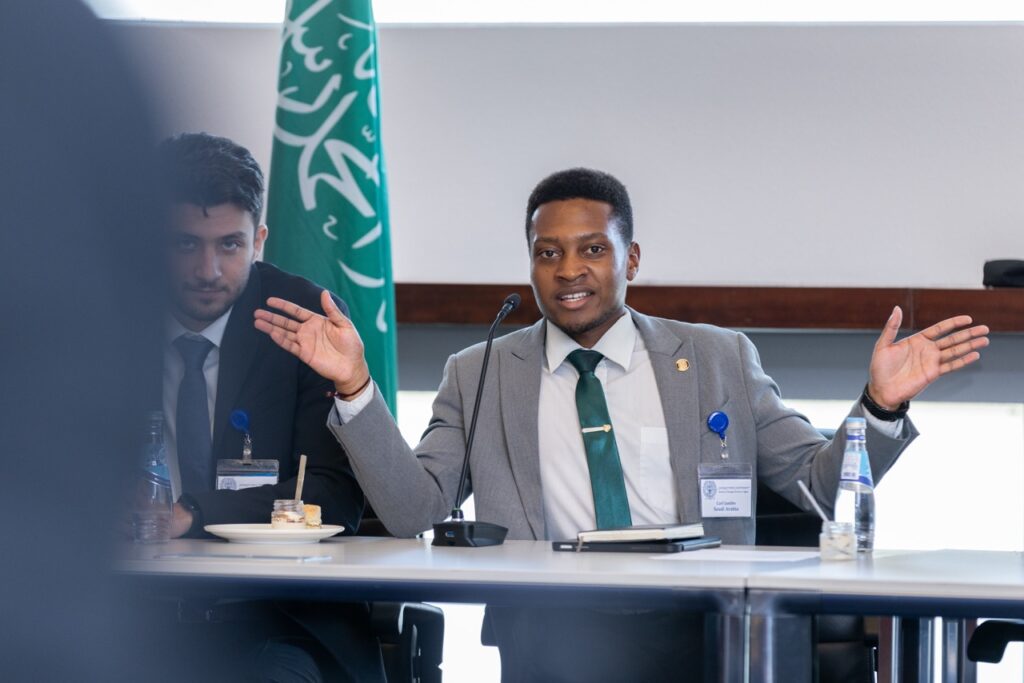
By Carl Jambo (GU-Q’28), a sophomore student at Georgetown University in Qatar.
This story is part of the Desert Hoya Blog, written by GU-Q students about their experiences and life as members of the Georgetown community in Qatar.
Emotions flared and tensions were high. Only 48 hours remained before complete environmental destruction. The FSO Safer, an oil tanker was leaking in the Red Sea and the greater the delay to extract the oil and fix the leak, the closer the world came to loss of marine biodiversity and disruption of an essential trade route. This hypothetical scenario was my introduction to Georgetown’s International Negotiation and Crisis Simulation. I assumed the role of a diplomat, representing Saudi Arabia collaborating with other students in the negotiations: those representing the United Nations, the Yemeni Ansar Allah Houthi rebel group, the internationally recognized Yemeni government, and an oil extraction company amongst other delegations.
The International Negotiation Simulation class would be completed in 7 days. The first 5 covered theory about how to negotiate, understand the various positions of stakeholders and how to ensure the delegation you are representing achieves the best possible outcome. In the final 2 days, over the weekend, we would simulate the actual scenario while guided by negotiation experts from the main campus, our Distinguished Diplomat-in-Residence, and GU-Q professors.
Friday morning began and the tensions were high. The Houthis, the delegation that was contending for recognition against the internationally recognized government, were determined. The Houthis were blocking access to the tanker, demanding recognition while the Yemeni government was advocating against working with this rebel group. The United Nations stood as the neutral body to facilitate the negotiations while a group representing an oil extraction company entered the negotiations as a means to make a profit. This group required safety in case the Houthis attacked. As representatives of Saudi Arabia, our job was to block any efforts for the Houthi group to gain leverage. Our mission was to ensure that the operation was funded by the United Nations and a representative group from the Netherlands.
At the end of the program, the Saudi Arabian delegation dictated the outcome of the negotiations. We managed to represent our government well, protected the internationally recognized government of Yemen and blocked all attempts by the Houthis to gain leverage.
I learnt how the true negotiation table works and how to manage high stakes environments. The negotiations required skills of persuasion, strategic alliance, the drawing of red lines and non-negotiables to cement our group’s position, teamwork and collaboration amongst other skills. This experiential learning opportunity exposed me to the world of negotiations from the lens of a diplomat. No amount of theory can ever replace that kind of learning. In the final hours, we celebrated as tensions were diffused and delegations that began the weekend at odds came to an agreement, a seemingly impossible task at the start.
A Georgetown education comes with expertise in learning from all angles. It blends rigorous academics, global awareness, and real-world experience so that we learn to create impact – well before graduation..
I am proud to be a Hoya because there are so many avenues and support systems at GU-Q that help enhance the experience of learning and this is why our School of Foreign Service is consistently ranked at the top of International Relations programs.
See some highlights from that simulation.
“The posts and comments on this blog are the views and opinions of the author(s). Posts and comments are the sole responsibility of the authors. They do not represent the views, opinions or policies of the University.”