

From Doha to Buenos Aires: How Global Education Shaped Me
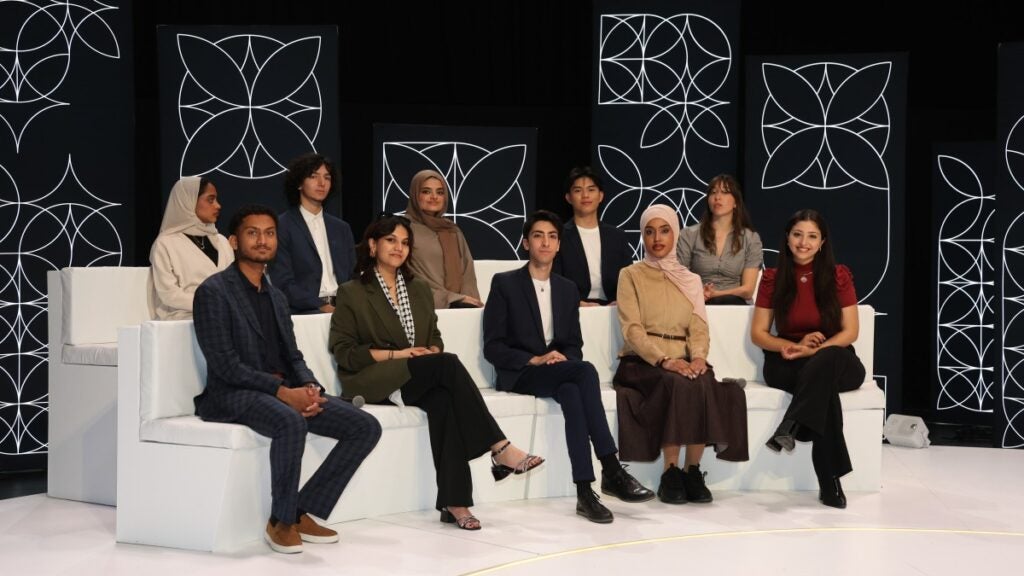
By Jay Pacer, a senior majoring in International Politics with an independent minor in International Law.
This story is part of the Desert Hoya Blog, written by GU-Q students about their experiences and life as members of the Georgetown community in Qatar.
“How should we reinvent the city?” This is the type of question that Georgetown students like me are being trained to answer on the daily. We talk about a plethora of things–from the stock market to the politics of conserving energy. Here, discourse that questions, provokes, and stretches you is normal. So when I landed in Buenos Aires in Argentina for the Doha Debates Town Hall, it felt like the most natural extension of what we already do in the classroom.
Over the course of a week, I joined six other Hoyas, alongside other participants, in a majlis-style debate. In contrast with a traditional adversarial debate, this debate is a type of conversational format that emphasizes open-mindedness and respectful listening to foster understanding and find common ground. Here, we talked about whether cities should prioritize community-building or economic expansion. But outside the debate room, exploring the city itself became part of the curriculum.
We explored Microcentro and Montserrat on guided tours that traced colonial history, visited Teatro Colón, one of the world’s best opera houses, and wandered through the galleries of Museo de Arte Latinoamericano de Buenos Aires (MALBA) to see how Latin America tells its own story in color and memory. Even our snack breaks, or merienda as they would call it, of sipping mate and eating asado, felt like small windows to see the culture of the city.
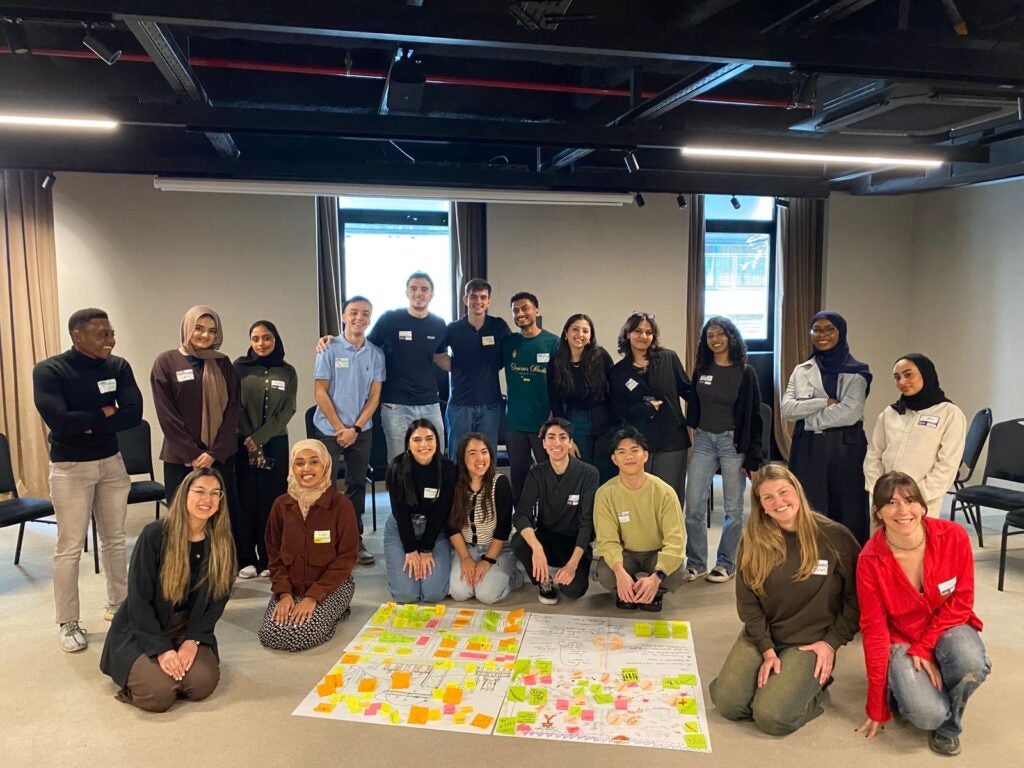
All of this was made possible because Georgetown University Qatar is part of something much bigger than one campus. We operate within Education City—a consortium that encourages collaboration across institutions and disciplines. Opportunities like the Town Hall come from that ecosystem: Doha Debates, a project of Qatar Foundation, pulls students from universities in and out of EC into global conversations, and this year’s program was folded into the Years of Culture initiative, which builds cultural bridges through immersive exchanges. Argentina and Chile were the 2025 hosts, which turned the entire trip not only into an intellectual and immersive experience but also a practice of diplomacy from the student perspective.
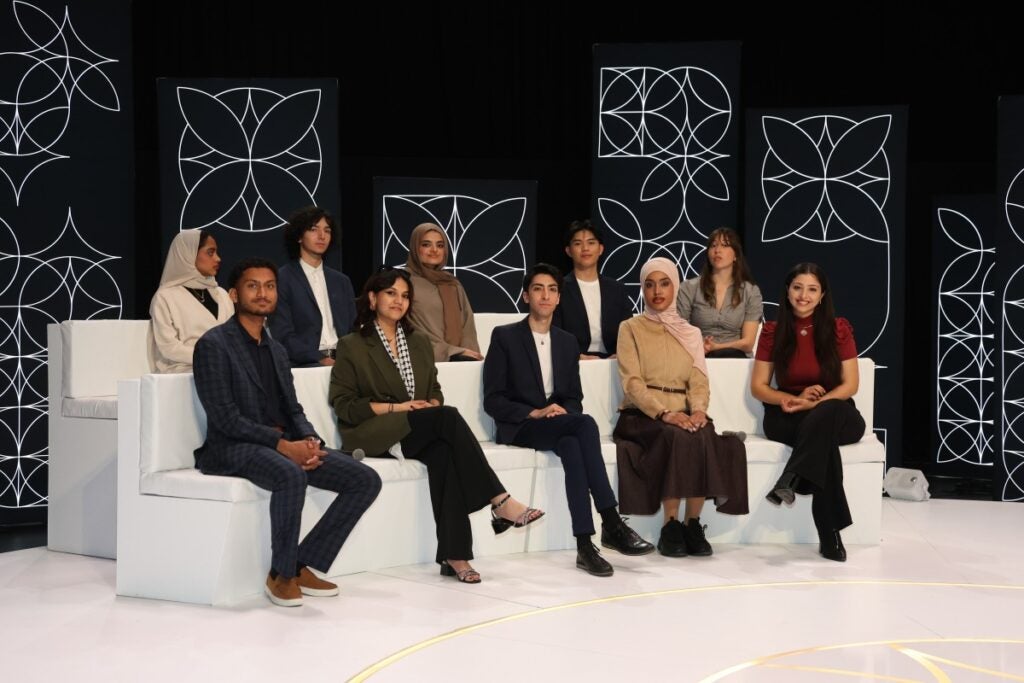
As a Hoya, this experience reminded me why global education matters. It’s one thing to talk about community-building and development from the comfort of Doha; it’s another to see how those debates unfold in real time, all shaped by other people’s own cultures, histories, and lived experiences. Being in this Town Hall and in the city of Buenos Aires made me realize that the questions we ask in class can go beyond the hypothetical. They’re deeply tied to people’s realities, and witnessing that firsthand sharpened my sense of what kind of student and global citizen I want to be.
More than anything, this trip affirmed that being a Hoya comes with the recognition that our education is not confined to Georgetown, whether in Washington, D.C. or Qatar. It exists in every city we enter and every community willing to teach us something. And in that sense, since our topic is far from my usual niche of academic interest, Buenos Aires truly expanded my understanding of urbanism and the cultural aspects of city architecture. It is in these moments that I find myself small enough to even begin thinking about this, yet large enough to be part of the conversation.
“The posts and comments on this blog are the views and opinions of the author(s). Posts and comments are the sole responsibility of the authors. They do not represent the views, opinions or policies of the University.”