

The Middle East: “Middle of What? East of What?” What One History Course Taught Me About How We See the World
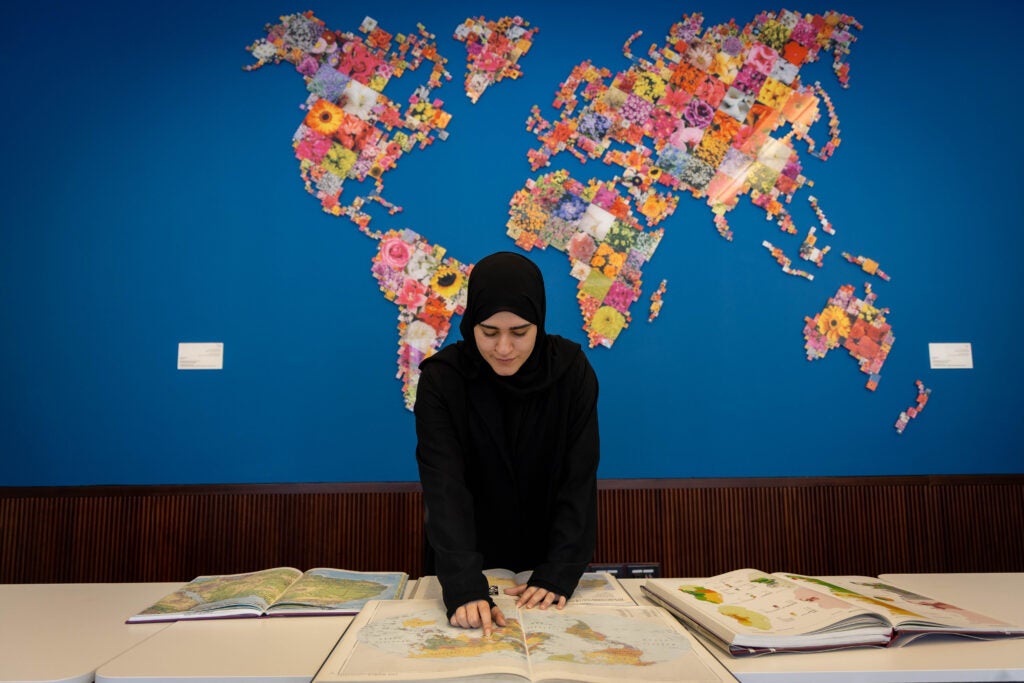
By Aisha Al-Emadi (GU-Q‘28)
Aisha Al-Emadi is a Class of 2028 International Politics major from Qatar
During my second semester of university, I was faced with the very important decision of picking which first history class I would take. Reading that sentence probably makes it sound like I’m being dramatic, but let me explain.
I love history. In high school, it was the class I dedicated the most time to, definitely not because I enjoyed memorizing dates but due to the fact that I treated it like storytime (very Gen Z of me). History classes, to me, are the time when we switch our personal lenses with those of the people in the historical narratives, perspectives and lived experiences we read about. It’s the time we dedicate ourselves to connecting the dots of the past to the lines of the present.
So when it came time to choosing one out of the three minimum history courses we are required to take at GU-Q, I had two main objectives:
- Not ruining my relationship with history.
- Making sure the class timing fits into my schedule.
As I browsed the classes offered for Spring ‘25 on GU Experience, our class registration portal, one title immediately caught my eye: Travel in and through the ME.
Here’s a little secret about me, I had no idea “ME” stood for Middle East. This somehow makes it even funnier that I later went on to take two history courses titled Middle East I and am currently enrolled in Middle East II. I walked into that first class with a very blank slate and an education heavily centered around Western and European History. From the very beginning, one thing followed me through every Middle East history course I took, maps.
This might sound painfully boring – and honestly, at first glance, it was. Maps felt solid, technical, small, and I felt they were detached from the historical stories I loved so much. Somewhere along the way, that changed. On the first day of class this semester, I walked in and saw Professor Nadya Sbaiti ready to teach. She began the lecture, not with a timeline, not with a list of important imperial powers, she began with maps. So many maps. Each map displayed the Middle East, different authors, versions and countries each time. And then came the realization that made me pause; almost all of these maps were produced by Western powers. They were in charge of deciding which regions fell under the umbrella of the “Middle East”. They were the ones drawing new lines, naming regions and defining what belonged inside them.
After being exposed to these maps a few questions ring in my ears every time I hear the term “Middle East”: “Middle of what? East of what?” I’ll let you look at a world map and answer these questions.
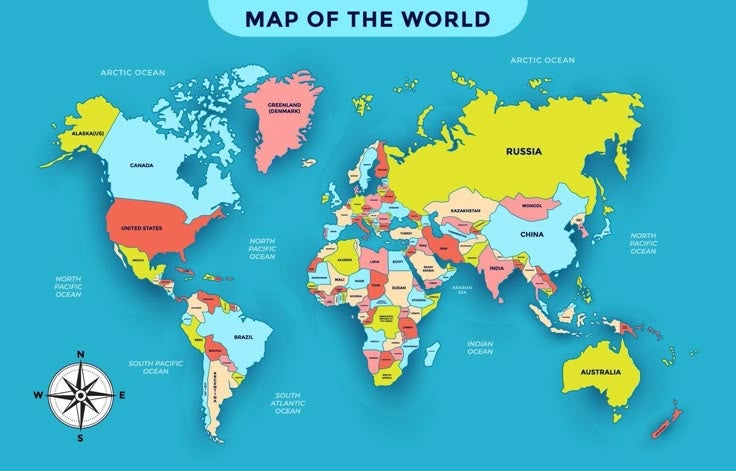
Those two questions force us to confront the fact that the names and borders we are so used to were created through specific political, colonial and historical moments. As Professor Nadia Sbaiti puts it: “Mapping how the boundaries of what constitutes the Middle East have changed over time reminds us that the concepts and regions we study each carry their own genealogies and are not fixed constructs.” Maps don’t just reflect reality, they shape it. Maps don’t just shape reality, they define us.
There was a time when the Middle East existed without defined borders, without passports, without rigid lines we now use to identify nationality and belonging. The differences that form our modern conflicts have always existed but they used to be normal, invisible. When they were pointed out by Western powers or to defensively develop due to the fear of Western takeover, they were highlighted and separated communities, peoples and lands that used to live in harmony. Today, they decide where we are from, where we are allowed to go and how we are perceived before we even speak.
Studying maps in the context of Middle Eastern history taught me that geography has never been neutral. The authors of the map matter. The name-givers of regions matter. Finally, those whose stories are highlighted and, more importantly erased, matter most of all.
“The posts and comments on this blog are the views and opinions of the author(s). Posts and comments are the sole responsibility of the authors. They do not represent the views, opinions or policies of the University.”