

Current Affairs Lecture Series Provides Answers, Raises Questions About A New Imperial Age
Georgetown University in Qatar’s newest lecture series on Current Affairs, entitled “In Focus: Iran and Venezuela,” was launched earlier this week in Doha. The discussion moved between the political aftershocks of mass protest in Iran and the recent exercise of U.S. military force on Venezuelan soil. Neither was treated as a self-contained episode or an explanatory endpoint. Instead, each served as an aperture—narrow at first, then widening—onto questions of power, precedent, and consequence.
Dean Safwan Masri introduced the speakers, GU-Q Professors Mehran Kamrava and Paul Musgrave, along with talk host, Al Jazeera Senior Presenter Folly Bah Tibault. He advised the audience not to make hasty judgments, saying “I invite you to resist easy conclusions, and to bring your questions to the conversation.”
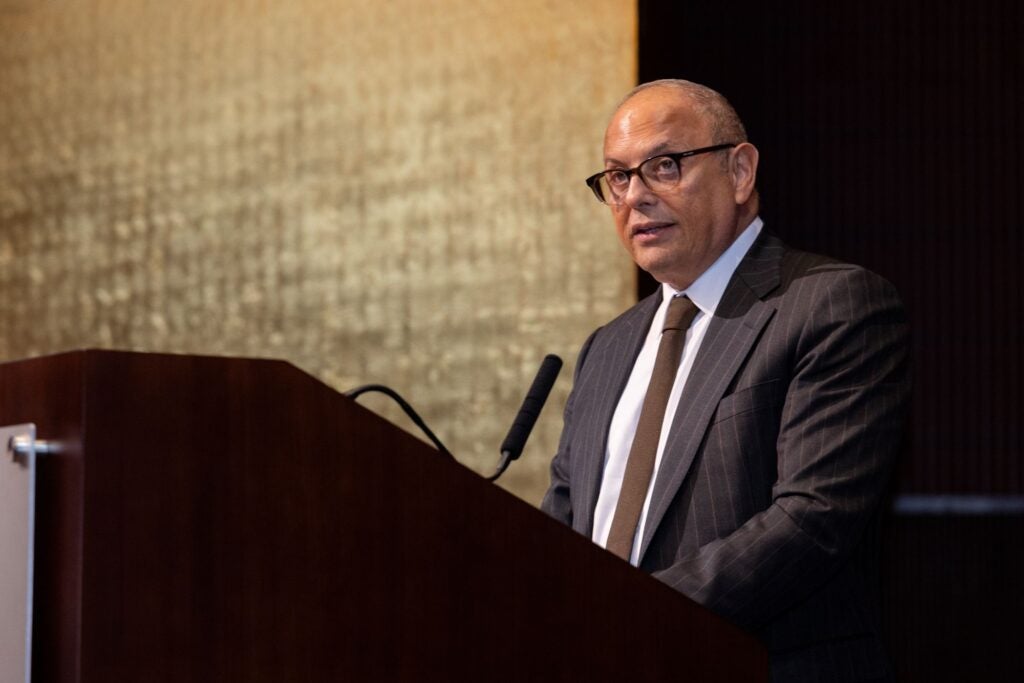
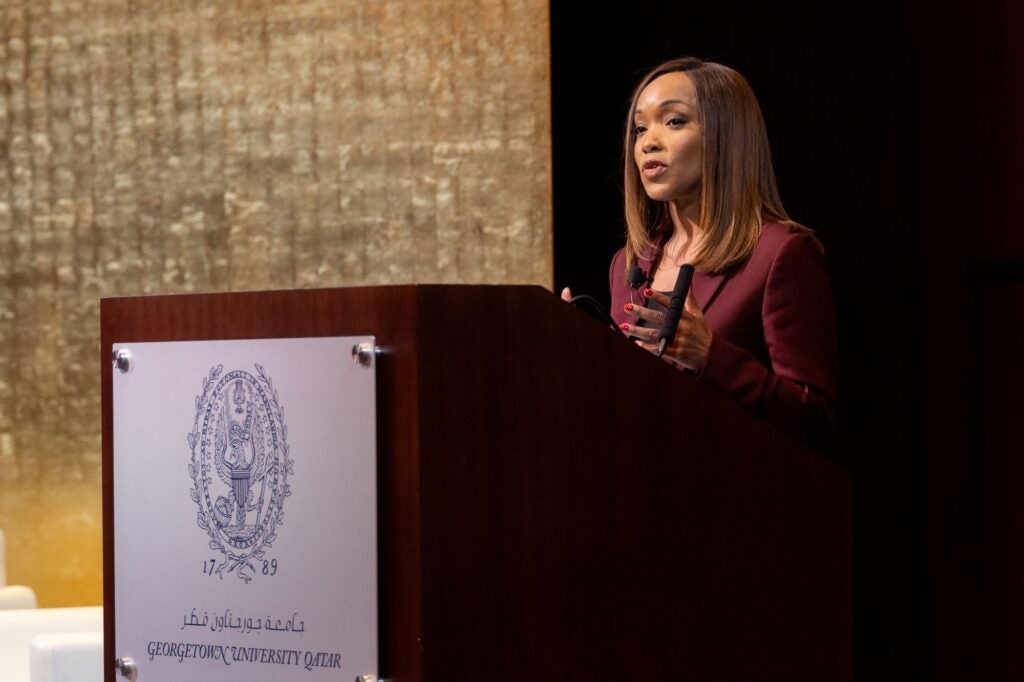
“One year has passed under Trump, and what a year it has been,” began Thibault, asking the professors to share their impressions of the US President’s latest actions.
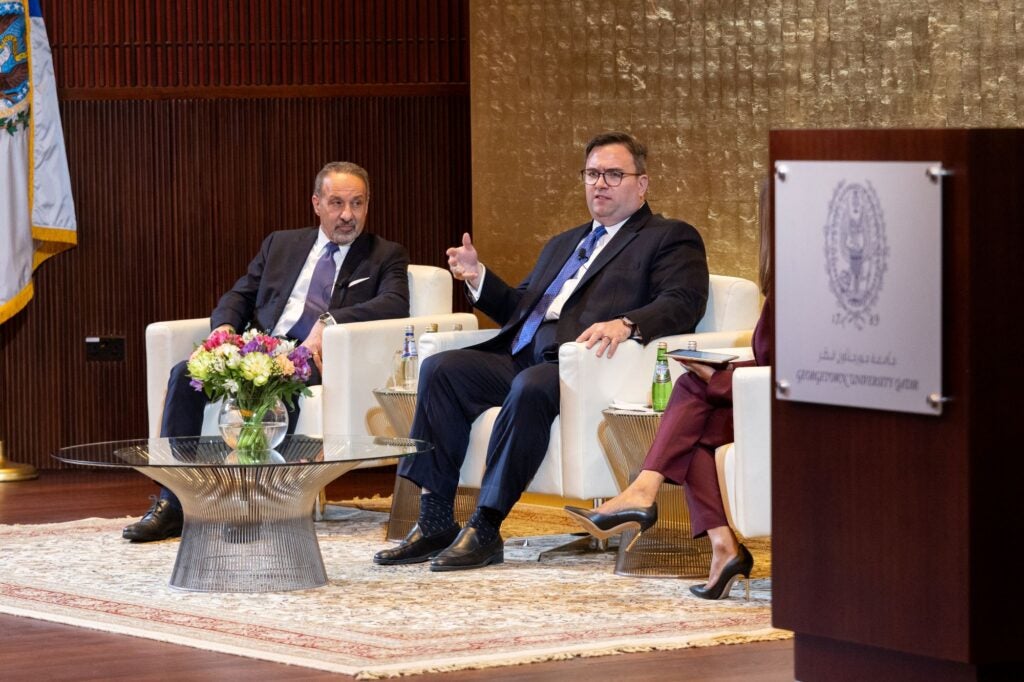
Dr. Musgrave, an American foreign policy expert, pointed out that while the US president is unpredictable, he is consistent in creating displays of dominance, seeking to raise his status among his closest allies and friends, while inducing fear and awe in his adversaries through quick, low-cost operations.
Donald Trump is unpredictable, but he is boundedly unpredictable. You know he is going to take the option that gives the greatest display of dominance. Both [the recent capture of the president of] Venezuela and [the summer 2025 bombings in] Iran were gambles,” he said.
Dr. Kamrava, an expert on modern political history of the Middle East, with particular expertise on Iran, drew parallels between Trump and Netanyahu’s unpredictability, speculating that more US and Israeli attacks on Iran may be imminent. “Iranian officials are now concerned about the possibility of bombing the home of Imam Khamenei or attempts to kidnap him,” he said.
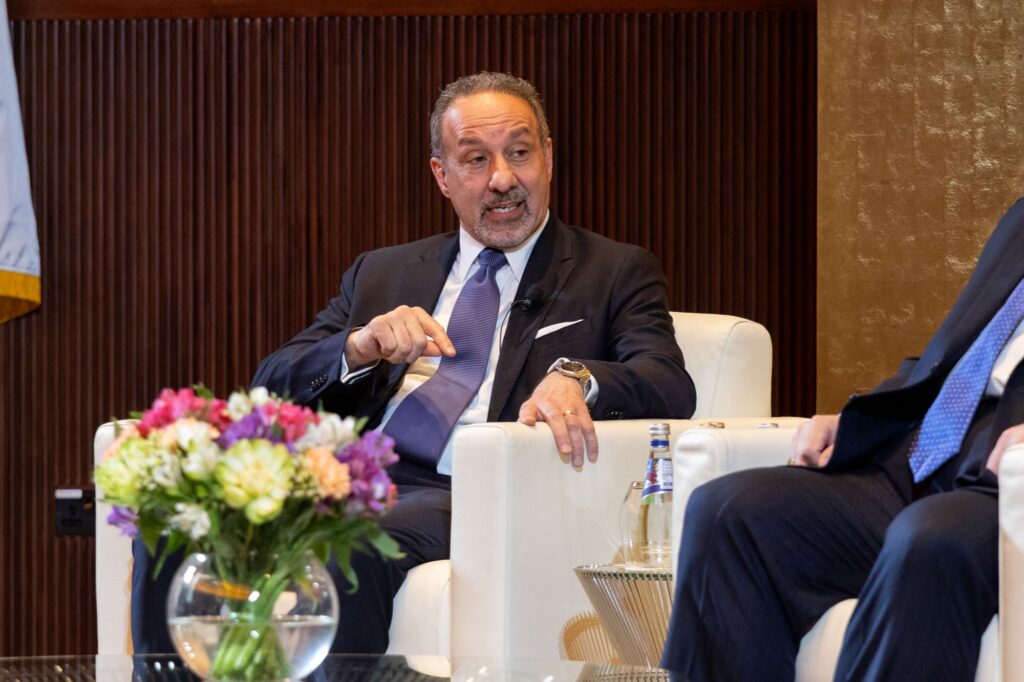
Internally, it appears that the protests in Iran are over and the regime has taken back control, explained Dr. Kamrava, highlighting that threats to Iran allowed hardliners to reestablish their control, while the perception of crisis also caused the moderates to ally themselves with the regime.
“There is no indication of any defection by the military forces, no indication of any difference of opinion. It’s becoming increasingly clear to the Iranian society that this is an absolutely brutal state and will do anything and everything to stay in power. A week ago, on national television, the government showed pictures of dead Iranians in body bags and asked the people to come claim them. Television said they were killed by terrorists, but the message to the average person on the street in Iran is that there is a heavy cost if you go and protest”.
Turning to the subject of Trump’s declaration of intention to acquire Greenland, Dr. Musgrave said that Trump views NATO member countries as servants or constituents of an empire. Greenland has been under US control since the 1940s, and there is no serious justification for full acquisition, but Trump wants a “visible submission to his will by NATO members.”
Dr. Musgrave warned that Europe should act before ultra-right-wing parties, who are considered Trump supporters, take power in the UK, France, and Germany. The EU should apply visa restrictions, and economic measures against Washington, DC, he said–including reciprocity tariffs. He warned that the US’s recent actions, viewed by many observers as imperialistic, may encourage other powers, such as China and Taiwan, to follow suit.
At one point, Santayana’s well-travelled maxim—“Those who fail to remember their past are condemned to repeat it”—reappeared. It captured, with disarming economy, one of the reasons this series exists: to keep history within reach as the present accelerates.
The event concluded with a lively audience Q&A, the analysis providing fodder for a host of new questions about recent events’ impact on the global world order. The public can provide feedback and suggest topics and speakers for the Current Affairs series by emailing guqcurrentaffairs@georgetown.edu.