

Georgetown University Hosts Ground-Breaking Islamic Bioethics Conference
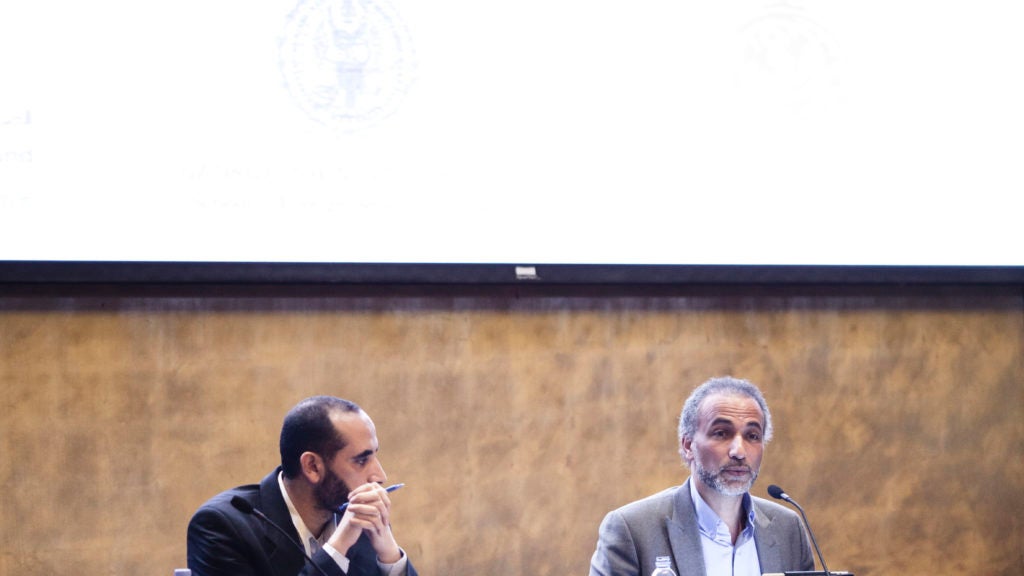
Georgetown University School of Foreign Service in Qatar (SFS-Q) hosted a ground-breaking Islamic Bioethics conference on the 24th and the 25th of June, entitled “The Interplay of Islam and the West.”
The international conference, collaboration between Qatar Foundation, SFS-Q, Qatar Faculty of Islamic Studies (QFIS), and Leiden University, brought together scholars and practitioners from within the bioethics field to interact with researchers, educators, and clinicians on a local, regional and international level, successfully enabling direct conversation between those working on bioethics in the West and in the Islamic world.
“It is an honor for Georgetown University SFS-Qatar to welcome such an outstanding group of scholars to this significant international conference. These scholars are at the forefront of advancing our understanding of the key questions in bioethics research that arise in both Islamic and secular discourses, and of the interplay between those two,” said Gerd Nonneman, Dean of Georgetown University’s School of Foreign Service in Qatar.
Nonneman continued, “This conference is a unique opportunity to build collaborative partnerships to further this work. It also fortuitously draws attention to the creation of an Islamic Medical and Scientific Ethics database, led by members of the Georgetown community, which will allow colleagues studying the many different aspects of the field of Islamic bioethics to share their insights with a global audience.”
Additionally, the conference presented the findings of a research project funded by the Qatar National Research Fund (QNRF). The unique initiative successfully collated the writings of scholars and theorists in a multi-lingual searchable “Islamic Medical and Scientific Ethics (IMSE)” database, the aim of which is to help encourage and foster research in bioethics field.
Dr. Brian Clark, the Managing Director of Biobank and a speaker at the conference said, “This is a unique opportunity for Qatar Foundation and Georgetown University to continue the open dialogue they are developing in the field of Islamic bioethics. It is conferences like this that develop clarity around bioethics and that will ultimately enable interesting biomedical research to flourish in Qatar and elsewhere in the Islamic world.”
The two-day conference featured a number of speakers who discussed an array of topics ranging from “Organ Transplantation in Saudi Arabia” to “A Muslim Clinical Ethics Consultant in the Western Healthcare System: Experience and Challenges.” An additional highlight included a hands-on workshop organized by the Qatar National Research Fund, which gave participants the opportunity to learn more about the Islamic IMSE database.
Keynote speakers included Islamic scholar Dr. Tariq Ramadan, professor of Contemporary Islamic studies at the Oxford University and visiting professor at QFIS, and Dr. Henk Ten Have, Director of the Center for Healthcare Ethics at Duquesne University, Pittsburgh.
Dr. Tariq Ramadan launched the event and delivered the keynote speech, which he summarized by stating, “We need to acknowledge that bioethics is a central field, and that we have a lot to share with people of other faiths and other democracies. Such an important conference should be everywhere.”
“I’m delighted to participate in this conference because it is just one more step in helping the project here at Georgetown,” he concluded.
Sheikh Ali Al-Qaradaghi, the General Secretary of International Union of Muslim Scholars, spoke on Sunday during a special session on ‘Normative Religious Perspectives’. He emphasized, “Islamic juristic institutions issue fatwas relevant to biomedical ethics only after consulting specialists, experts and doctors, as they are established scholars in the realm of science and medicine.”