

Albania’s PM Charms with Unfiltered Advice and a Call for More Albanians at Georgetown
In a wide-ranging and delightfully off-script conversation at Georgetown University in Qatar (GU-Q), Albanian Prime Minister HE Edi Rama blended humor with practical yet unconventional guidance for the next generation of global affairs students. The event, “The Art of Governance: Albania’s Strategic Innovation in Global Politics,” was moderated by Professor Rogaia Abusharif and introduced by GU-Q alumna and fellow Albanian, Jeta Kreka (SFS’23).
“Studying here, in Doha—a global hub of diplomacy, mediation, and geopolitical negotiation— has shaped the way I understand politics. It has taught me how small states navigate big conversations, how identity becomes a form of soft power, and how narrative can matter as much as strategy,” Jeta began.
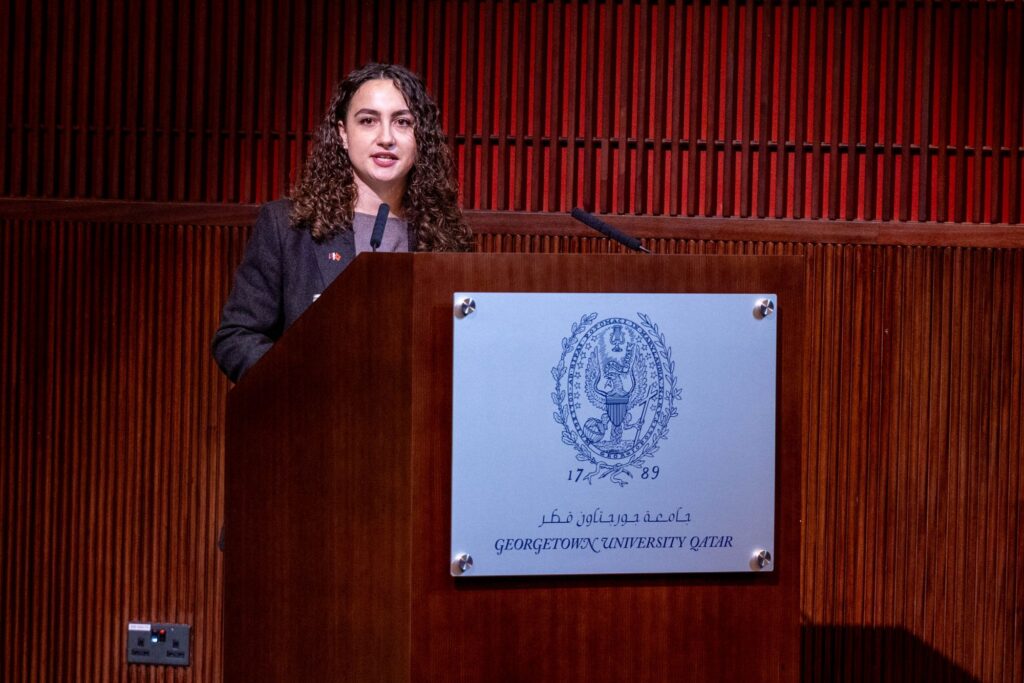
“And Albania has shaped that learning just as much. The way my country has reinvented itself, argued with itself, survived itself, and rebuilt itself has given me a very particular lens through which I perceive diplomacy: nothing is linear, nothing is guaranteed, and sometimes the most unexpected actors change the story.”
Jeta’s eloquent introduction caught the Prime Minister’s attention. “I’m very proud of having been introduced by a shining Albanian student,” he said, directing his attention to Dean Safwan Masri in the front row. “I hope that she is bright and great enough to inspire you to bring more Albanian students here.”
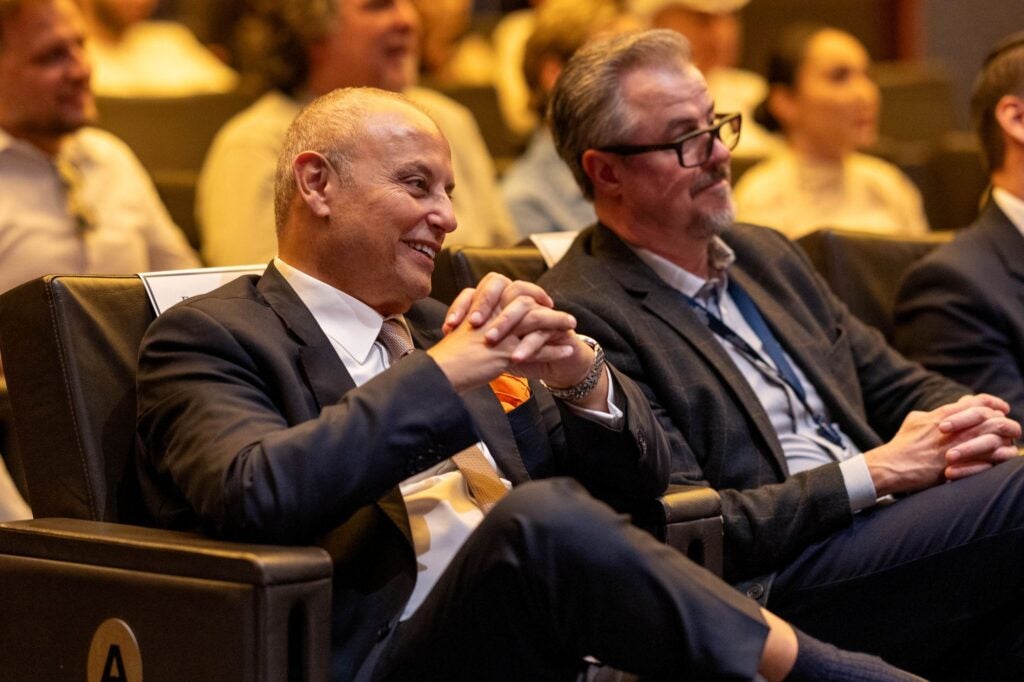
From the outset, HE Rama disarmed the audience with humor, joking that he hoped students weren’t disappointed that he wasn’t wearing a tie. “This is one of the reasons I feel so good when I come to this part of the world, because I don’t have to explain why I don’t have a tie,” he said, referencing local traditional dress norms.
What followed was part masterclass in political leadership, part artistic autobiography, and part unexpected life advice.
An established painter with exhibitions around the world, HE Rama traced how art shaped his worldview long before politics. “I always wanted to be an artist. I never imagined that one day I would be something else,” he said. Under Albania’s former regime, he recalled that “you would go to jail for possessing books on Pablo Picasso,” and even owning a Qur’an or Bible was viewed as “a weapon without permission.” Art became his gateway to “question the limits of freedom,” which eventually “brought me to fight for my own freedom.”
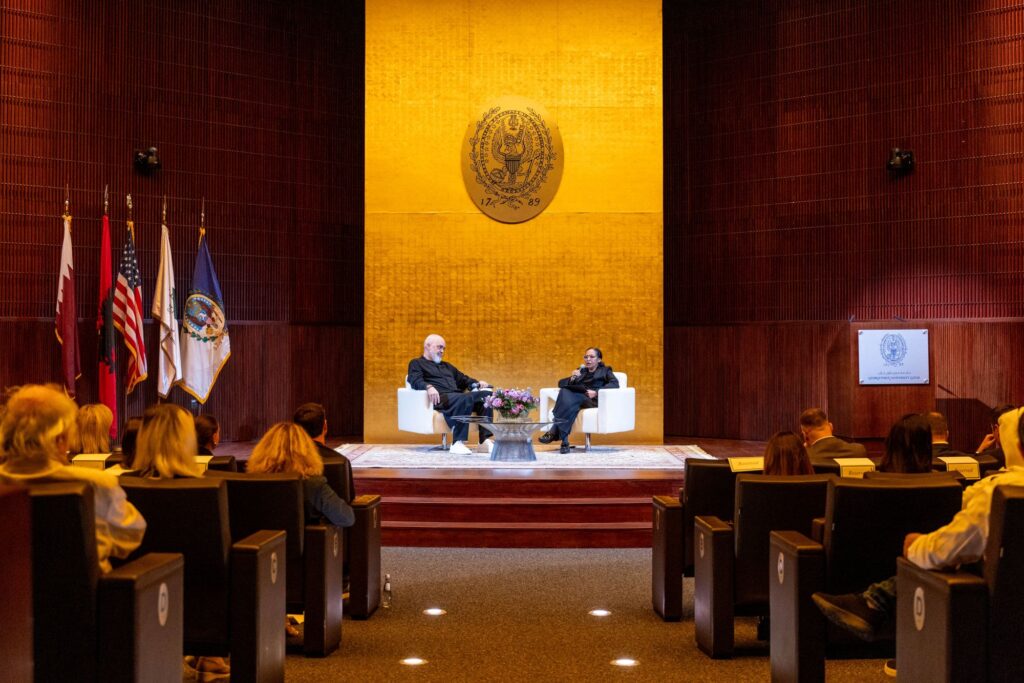
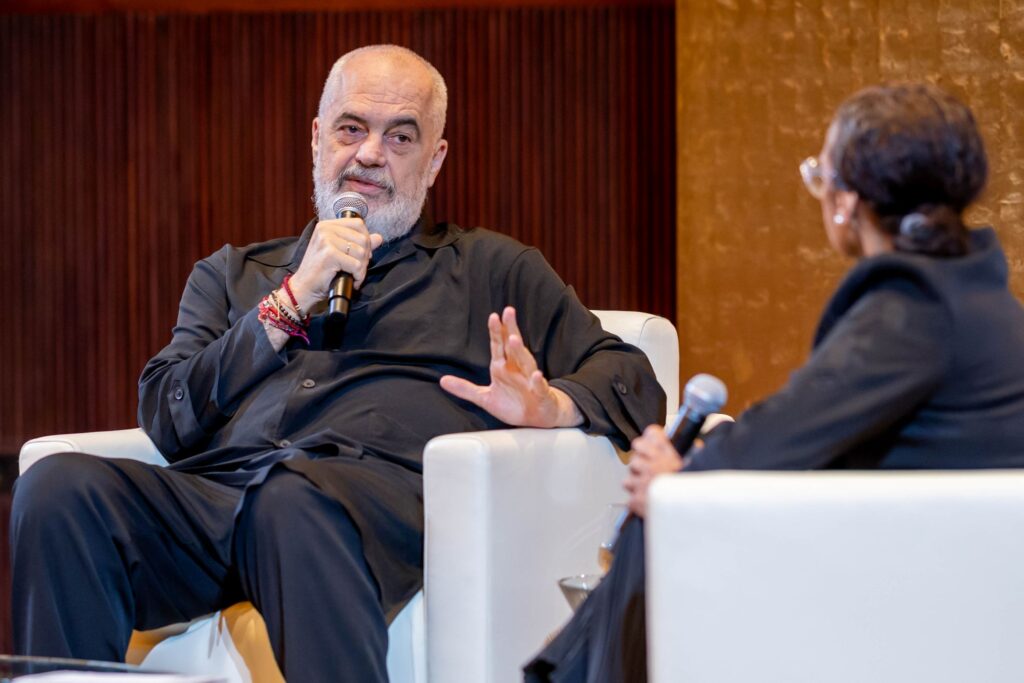
Even as prime minister, HE Rama continues to paint, often during cabinet meetings. He described an office desk covered with art supplies with which he doodles while ministers present major updates. His candor touched the audience, many of whom harbor a love both for art and politics. “When I became Minister of Culture… I had to go to government meetings, and it was like weekly torture,” he admitted. But drawing offered an outlet that improved his concentration: “When your eyes are following the hand and the hand is painting… your ear is totally focused”
The room erupted in laughter when he recounted discovering that a colleague had secretly saved dozens of his early doodles. “As the value of the drawings is growing…I can tell you he will be a rich person.”
Though playful, the conversation often returned to governance and His Excellency’s unconventional approach to Albania’s transformation. Early on as mayor of Tirana, his decision to paint entire buildings helped restore civic pride—and encourage tax compliance. But he was quick to remind audiences not to overgeneralize his story: several famous tyrants were also painters. It was advice characteristic of his style: at once self-deprecating and sage.
He described how his country’s candidacy for EU membership has been made possible through innovative thinking around digital transformation. “Albania is above the average of the European Union when it comes to digital services, not because we are smarter or more developed than them, but because we come from behind and we jump.” Yet despite his bid for acceptance into Europe, it is to the Gulf region that he looks to for inspiration: “If you want to know how a new generation of leaders can change the history, direction, way the country looks at itself, and the way the others look at the country, you have to visit Qatar, Saudi Arabia, and the Emirates. It’s absolutely incredible,” he said.
With characteristic flair, he closed with both a challenge and an invitation: to continually question the status quo, and remain anchored in individuality and creativity no matter how high you climb.