
Imagine, Listen, Connect: Lessons for Today from Dr. Marc Lamont Hill’s Talk at GU-Q During Black History Month
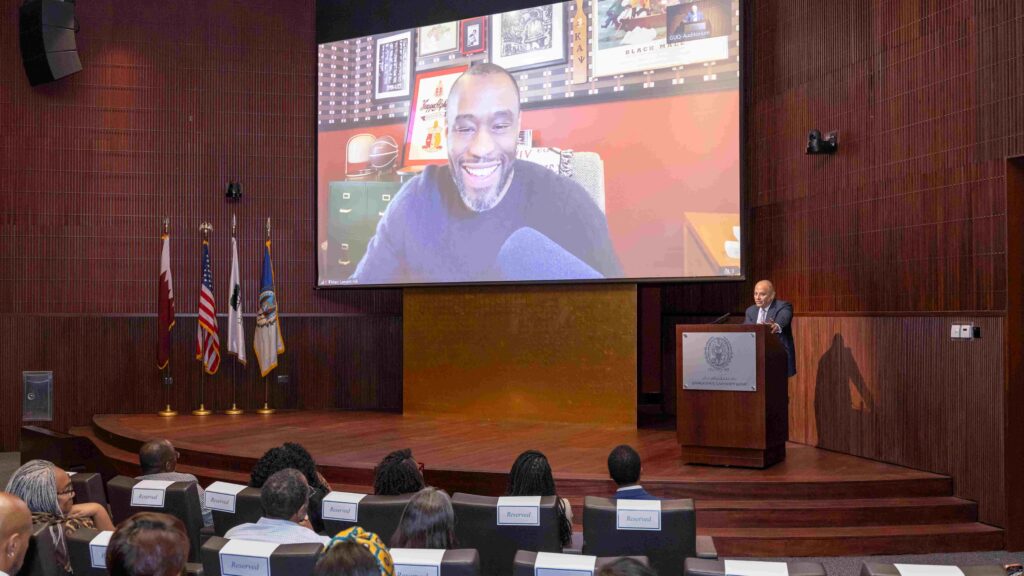
In a stirring Keynote to a packed auditorium, author, activist, and television personality Dr. Marc Lamont Hill offered key takeaways from the Black liberation struggle relevant to today, as part of GU-Q’s Black History Month centennial celebrations.
“To put it very bluntly, the world is on fire,” said Dr. Hill, reflecting on rising hatred, violence, concentration of power, and economic disenfranchisement in America and around the world. Joining virtually despite contracting Covid and being unable to travel, Dr. Hill stressed the urgency of his message today, saying: “The work has to continue.”
The Radical Imagination
Dr. Hill’s first lesson was on the power of imagination to be a guiding light during chaos and oppression. “The radical imagination is about futurity. It’s about our capacity to imagine the world that is not yet. Our vision of a world of freedom is one where everybody is liberated. The black radical imagination says, ‘We don’t have to just come up with reforms that nibble at the edges, we can reshape the entire world’.”
Radical Listening
The second lesson was radical listening—truly hearing the vulnerable in order to fight global systems of oppression. “This tradition of radical listening teaches the moral significance and the moral achievement that is attached to listening to the vulnerable, but it also teaches the political significance.” Listening uncovers connections between educational underdevelopment and mass incarceration, between poverty and militarism, neoliberalism and disaster capitalism, which helps form bonds and fosters collective action, he said.
To make his point, he reframed famed leader of the Civil Rights movement Dr. Martin Luther King’s “I Have a Dream” speech, as radical imagination about the future of the nation, that demanded radical listening. “Dr. King was calling for radical economic reform,” explained Dr. Hill. “He was saying that America would only be as good as its promise,” referencing the promises of equality made to Black people since emancipation from slavery in 1865.
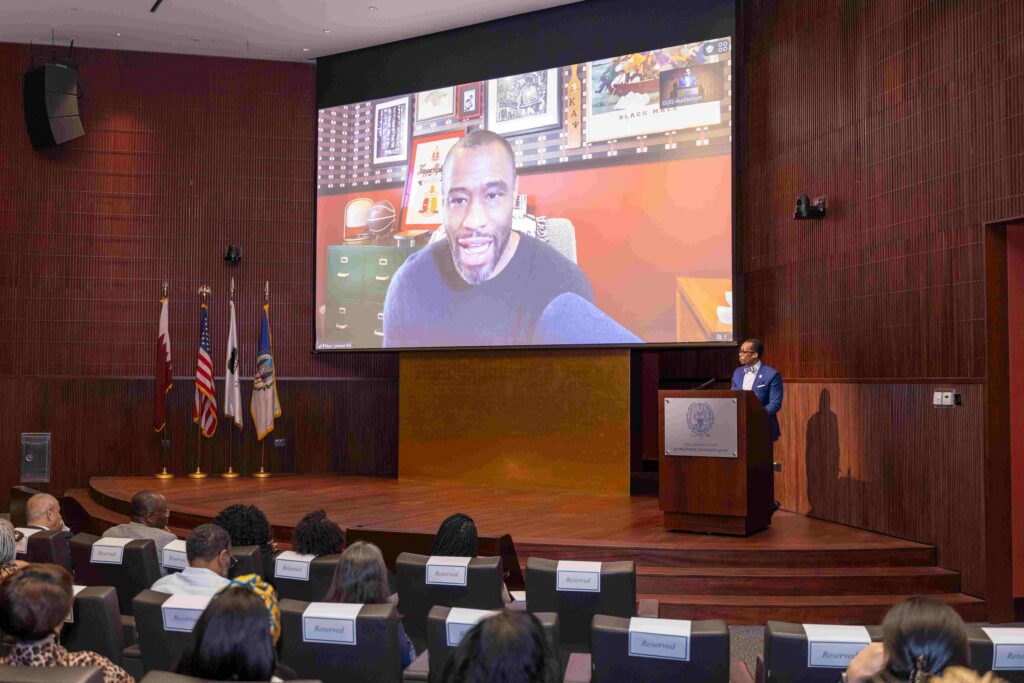
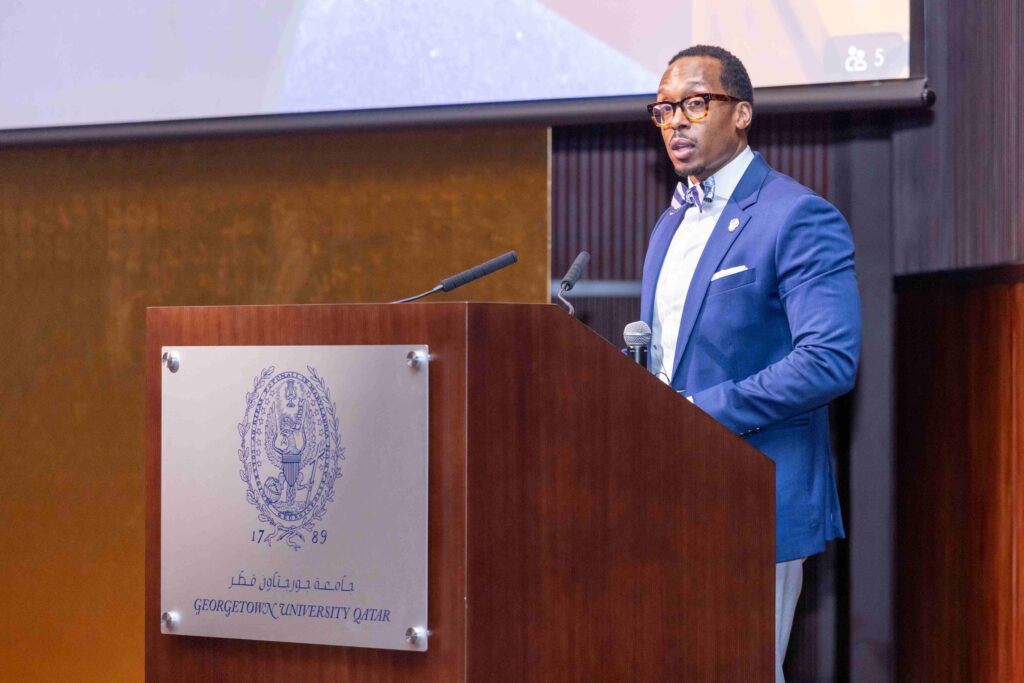
Dr. Hill’s talk, which carried into a lengthy Q&A session moderated by Dr. Aaron Jones of American School of Doha, concluded with a final reflection on the lessons from Black History Month: to organize around values and engage radical imagination and deep listening “as an ethical, moral, and political project, that ties us together,” said Dr. Hill. “It is our duty to honor that tradition, not just to uplift, uphold, and affirm the dignity, humanity, and singular contributions of black folk, but to help create the global beloved community, one in which all of us can, and will be free.”
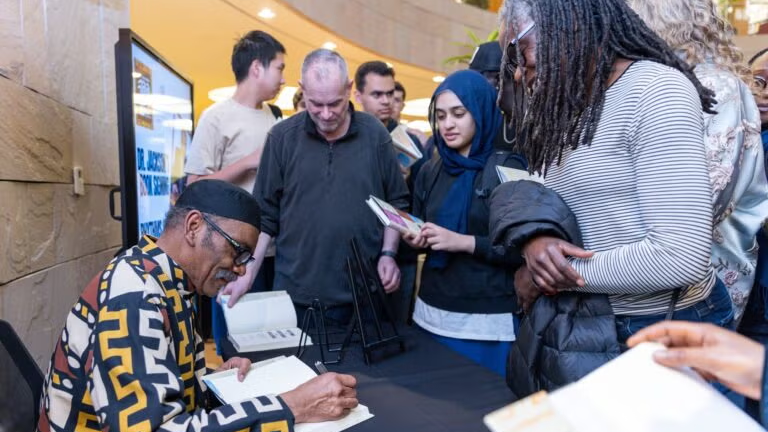
During the reception that followed, it was clear the message was received.“As a Zambian with a colonial past, I’ve always been focused on the problems in Africa,” shared Nelly Kalukango (GU-Q’26). “But tonight I saw new connections, and a shared struggle across continents that I now feel more committed to achieving a shared liberation.”
Other Black History Month Stories
In honor of Black History Month, we celebrate the many contributions of our Black students, alumni, faculty, and staff to our community and society, and recognize the broad range of teaching, scholarship, and advocacy at Georgetown aimed at advancing Black heritage and history.