

“We Have the Talent and Resources”: GU-Q Builds Platform for Unmediated Global Dialogue
When acclaimed author Pankaj Mishra stepped onto the GU-Q campus for conversations with Writer-in-Residence Kamila Shamsie, he opened with a confession: “It’s fantastic to find myself far away from what is supposedly home and then to realize—yes, there is another home here.”
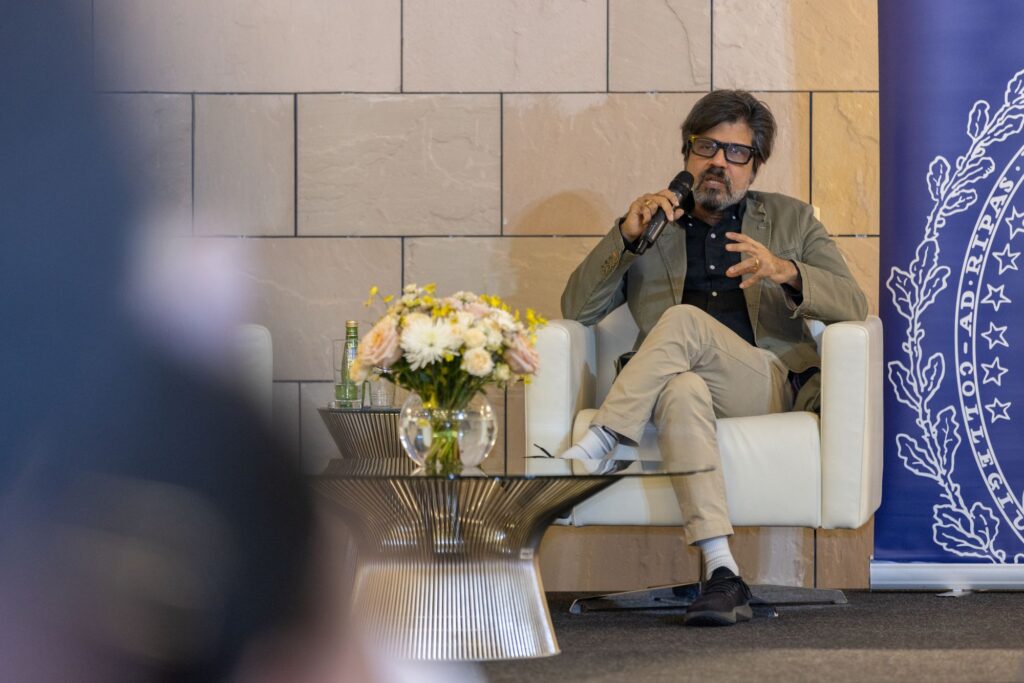
That sense of intellectual homecoming is precisely what Georgetown University in Qatar cultivates: a place where thinkers from Asia, Africa, and the Middle East speak from the center—not the margins—of global conversations.
How Georgetown Global Dialogues Began
During the conversation, Mishra recounted how Georgetown Global Dialogues (GGD) were born. After years of meetings with Georgetown University President Emeritus John J. DeGioia, Mishra was asked a transformative question: “Tell me what you would like to do?”
Mishra’s answer challenged the status quo: create a platform that recenters writers and thinkers from the Global South—voices that are “often not permitted in the Western mainstream, or that we self-censor and suppress.”
That idea became the Georgetown Global Dialogues, now internationally recognized with iterations in Washington, DC, Rome, and Barcelona. For the first time in the Global South, it will be held in Doha in Spring 2026. The aim is to build spaces where conversations no longer need mediation through London, New York, or Paris. “We now have the talent and the resources to conduct these conversations ourselves,” Mishra emphasized.
Students as Equal Partners
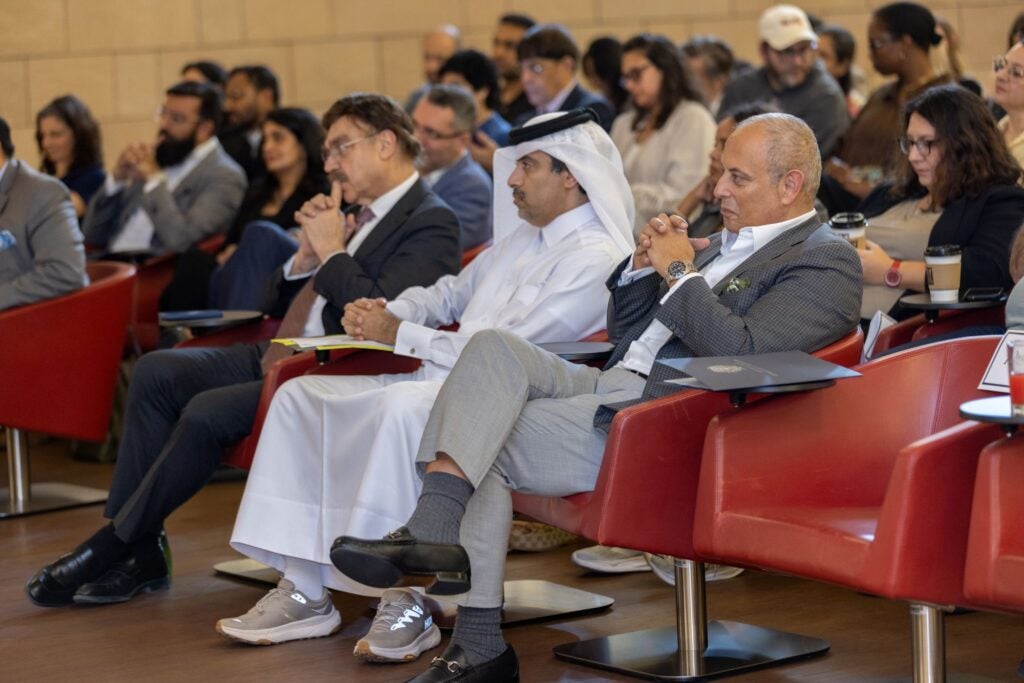
The fireside chat served as prelude to Mishra’s public Qalam Series event, highlighting GU-Q’s distinctive approach: conversations begin internally with students, faculty, and visiting thinkers, then extend outward to shape public discourse.
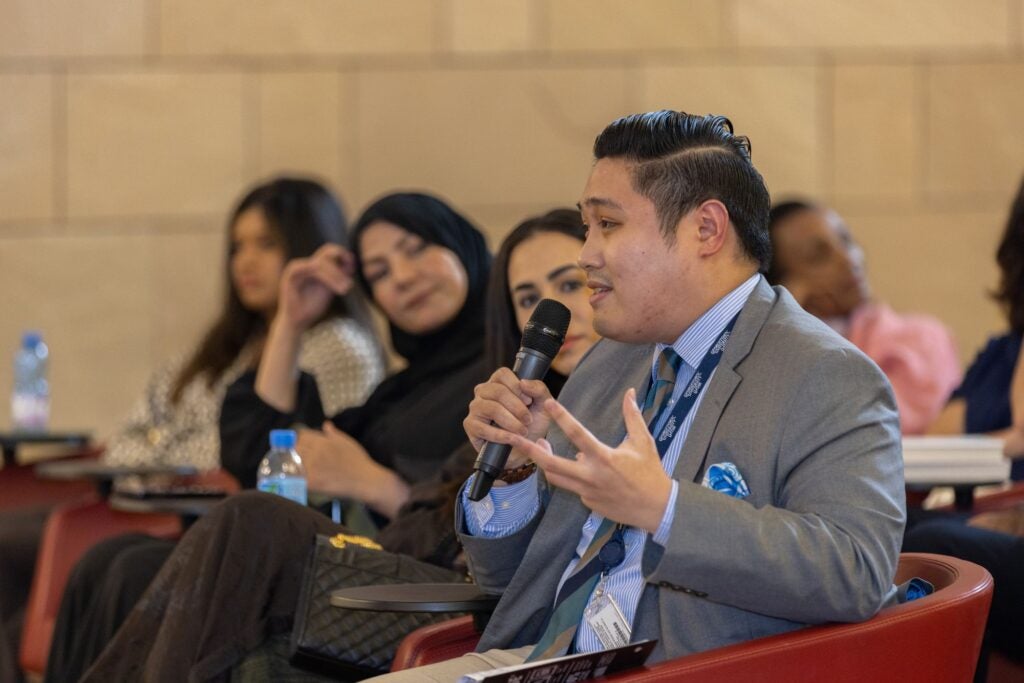
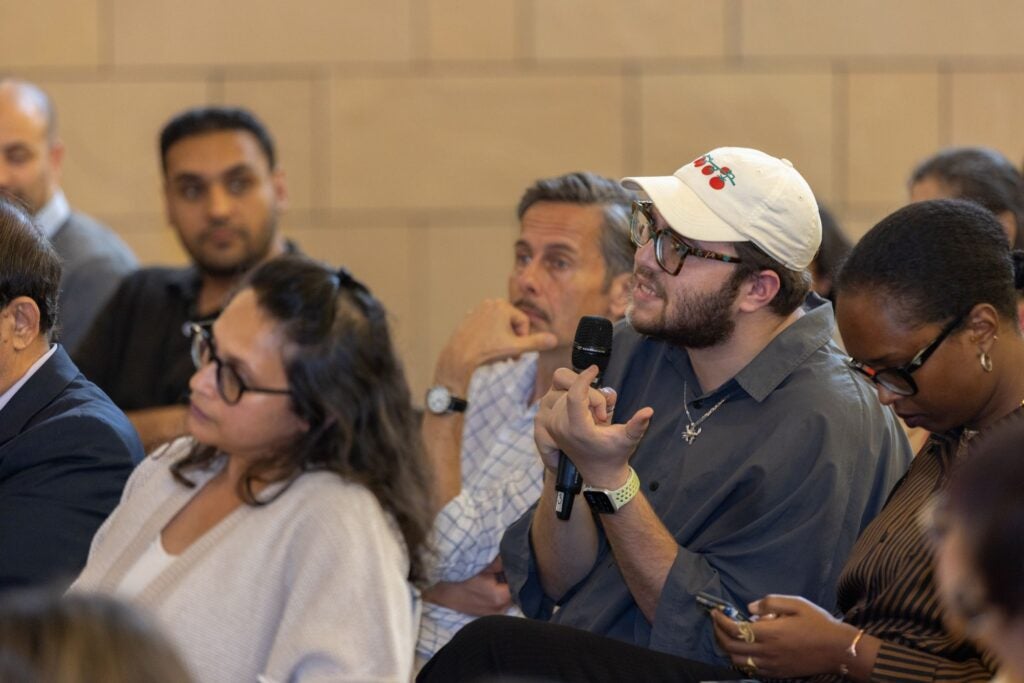
Shamsie invited GU-Q students who participated in the recent Barcelona GGD to share their experiences. Carl Jambo, Class of 2028 from Zimbabwe, described the power of intergenerational exchange: “These conversations featured authors like Pankaj, but they also gave us, as young people, the space to speak.”
Vietnamese student Tuan Nguyen, Class of 2027, noted how GGD expanded both intellectual and personal horizons: “Being able to talk one-on-one with scholars and thinkers allowed me to approach ideas in ways I had never imagined before.”
Their reflections confirmed Mishra’s point: when people from different parts of the world meet, “they suddenly find they have a lot to talk about—and that it doesn’t need to be mediated through the Western centers of knowledge production.”
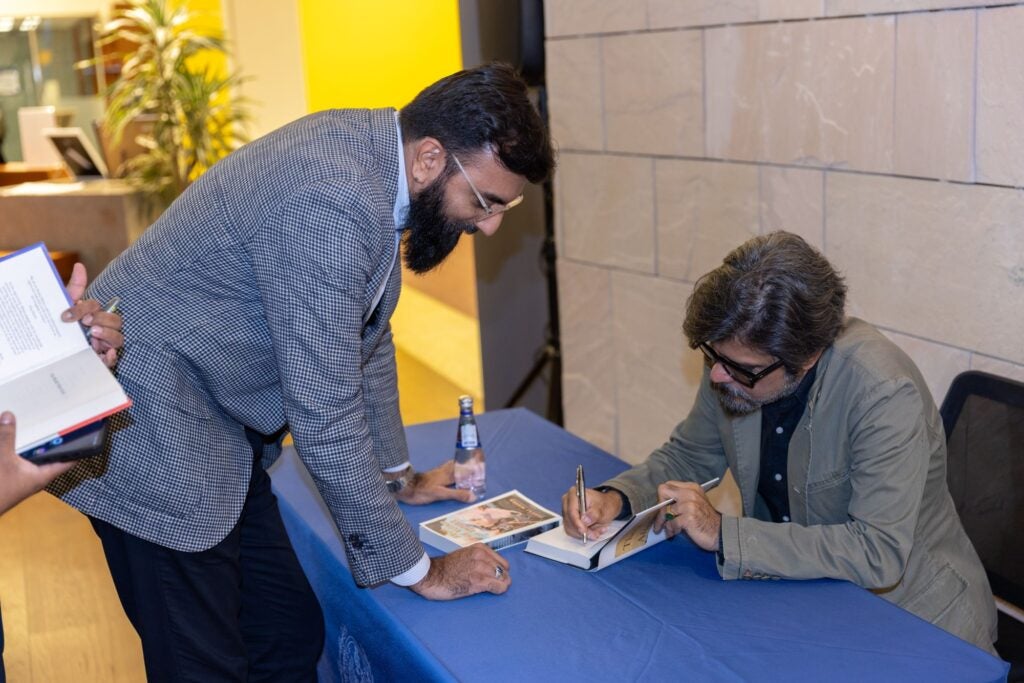
The Georgetown Global Dialogues mark a new chapter in how Georgetown engages the world: intentionally, cross-culturally, and rooted in intellectual traditions beyond the West. And Doha, at the crossroads of continents and ideas, is a natural home for this work, not as a mediator, but as a site of encounter.