

GU-Q Advances Conversation on Disability Access in Qatar
As Qatar strengthens its national commitment to inclusion, higher education is emerging as a key driver of change. With a recent update to Qatar’s disability law requiring all educational institutions to provide reasonable accommodations, and the announcement that Qatar will host the 2028 Global Disability Summit, the country is rapidly expanding its capacity to serve an estimated 30,000+ students with disabilities. At the center of this momentum, Georgetown University in Qatar (GU-Q) is positioning itself as a national hub for collaboration, dialogue, and leadership.
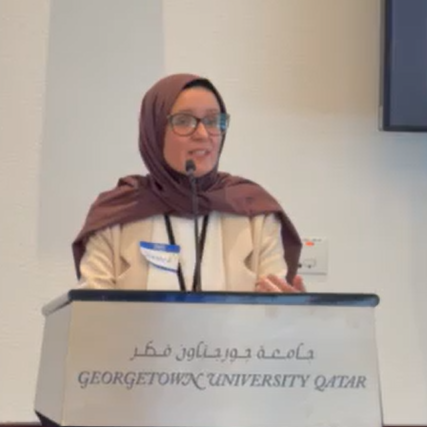
Joanna Popczyk, GU-Q
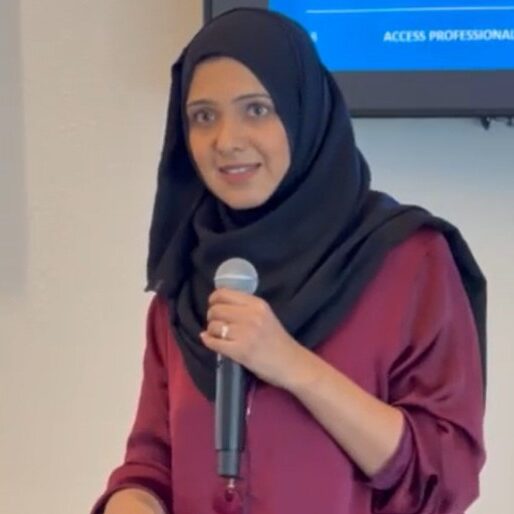
Sabika Shaban, HBKU
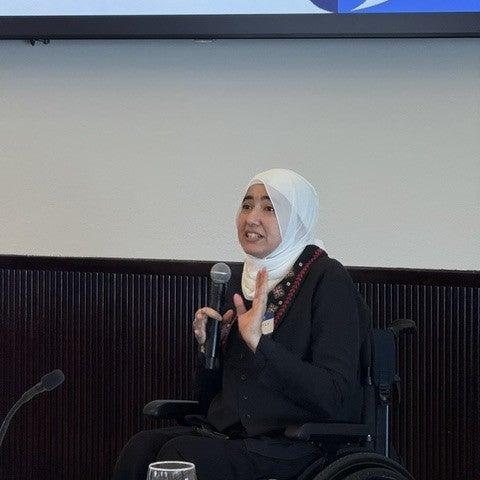
Dr. Ghanimeh El-Taweel, HBKU
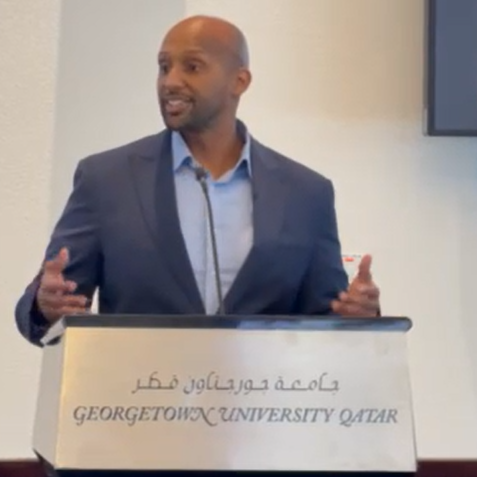
Dr. Mohamoud Adam, GU-Q
Capitalizing on this pivotal moment, GU-Q recently hosted one of the first cross-university gatherings dedicated to accessibility and disability inclusion in higher education. What began as a modest idea quickly grew into a landmark convening. Representatives from nearly every major university in Doha attended, including all Education City partner universities, Qatar University, HBKU, Doha Institute of Graduate Studies, University of Doha for Science and Technology, Al Rayyan University, and the University of Aberdeen.
“The goal was to see if there would be interest in people coming together, sharing best practices, and building a longer-term network,” said Dr. Mohamoud Adam, Director for Student Academic Success at GU-Q. “The response showed just how needed this conversation is.”
Joanna Popczyk, Learning and Accessibility Specialist at GU-Q, who proposed the initial idea, emphasized the significance of the moment. “It’s a very exciting time—there is a lot of interest and momentum now that there has been a fundamental update to disability law in Qatar,” she said, noting that conversations around collaboration had been building for nearly two years before coming to fruition.
The gathering brought together access professionals in higher education—university leaders and professionals who engage with policies and services to meet the varying needs of students in universities in Qatar. Two inclusion activists from HBKU, Instructor Dr. Ghanimeh El-Taweel and Researcher Sabika Shaban, provided an overview of the disability landscape in Qatar. They shared the new Law No. 22 governing education for persons with disabilities as well as emerging research findings from a national research project on disability infrastructure in Qatar’s universities. “Qatar is almost the size of a living lab in terms of exploring access to affected populations,” noted Shaban. “There is a lot of potential for impactful change to support university students with access needs,” she added, highlighting the strong foundation of care and initiatives to identify and address data, service, and policy gaps.
For GU-Q, the convening reflects a broader mission rooted in Jesuit values and a commitment to the common good. By bringing institutions together, the University is helping move accessibility from isolated efforts to a shared national agenda – one that places dignity, opportunity, and inclusion at the heart of Qatar’s educational future.
To join the Access Professionals in Higher Education Network, please contact Dr. Mohamoud Adam ma2252@georgetown.edu or Joanna Popczyk jp2046@georgetown.edu.