

“Rhythms of Resistance and Resilience” Exhibit Opens Black History Month Celebrations
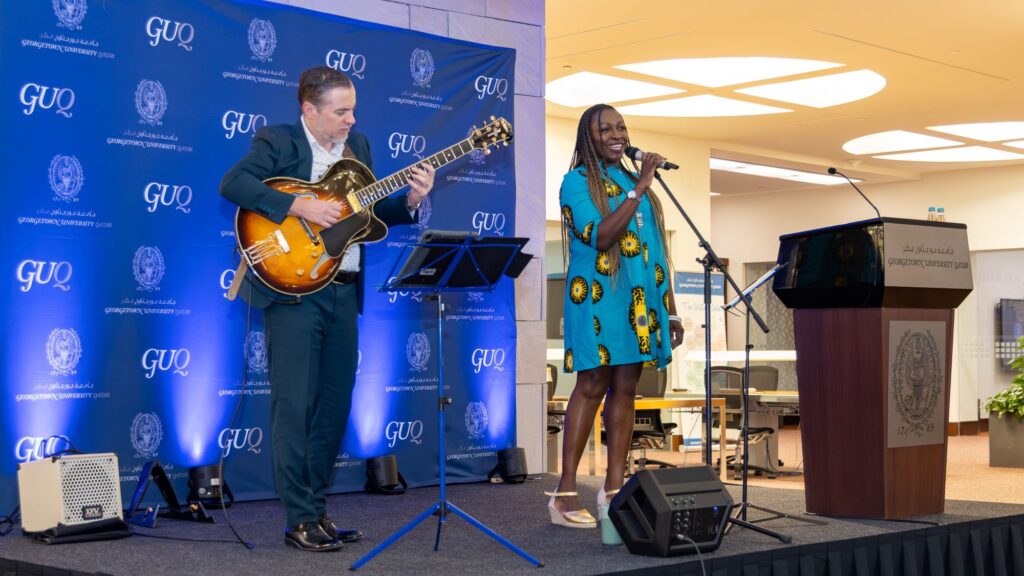
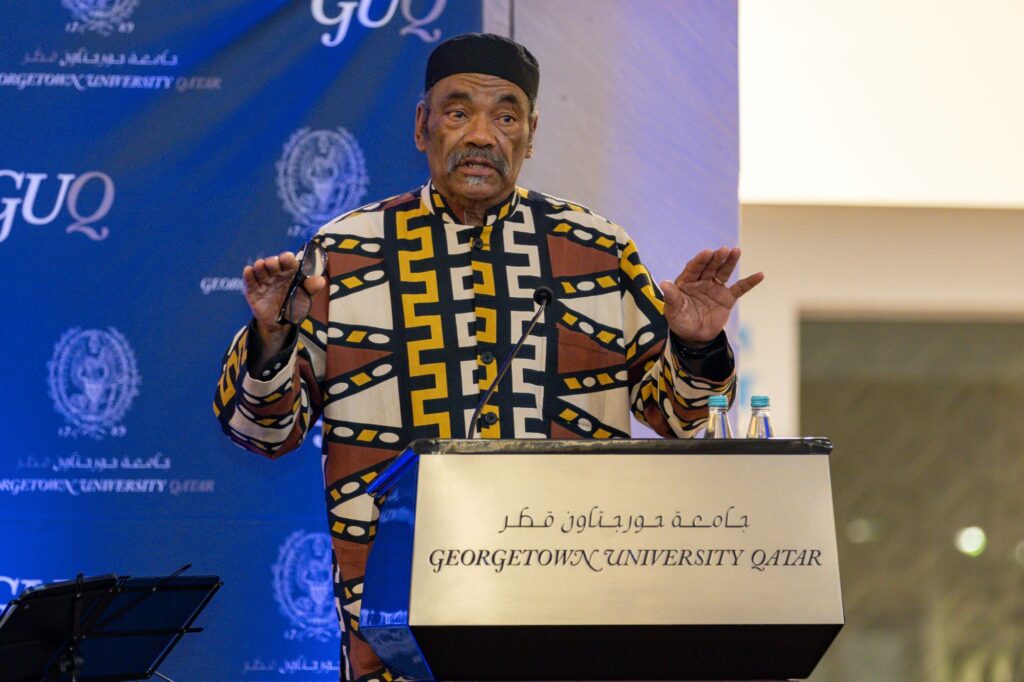
“Tonight is a celebration of those who fight for equality, demand dignity, who have searched for the inherent goodness of the human spirit,” declared Maurice Jackson (G’95, G’01), during a photography exhibition and Jazz performance that marked the opening of Georgetown Qatar’s Black History Month celebrations.
A Washington, DC, campus-based professor of history, Black studies and music. Over the years, Dr. Jackson has spent several spring semesters at the Qatar campus teaching and playing a leading role in contextualizing American history to international audiences.
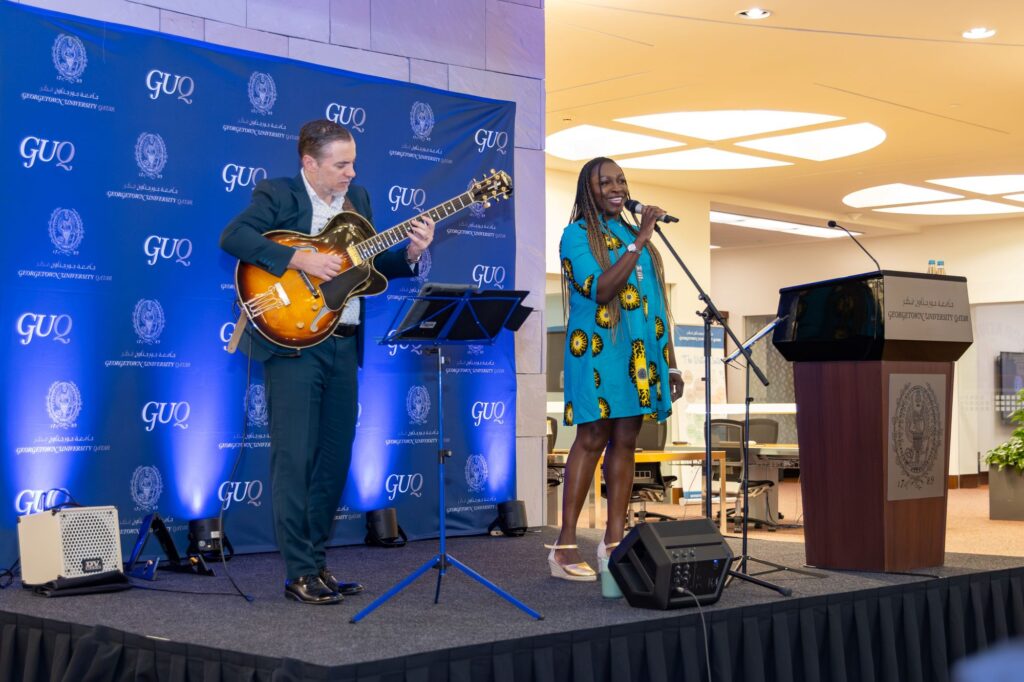
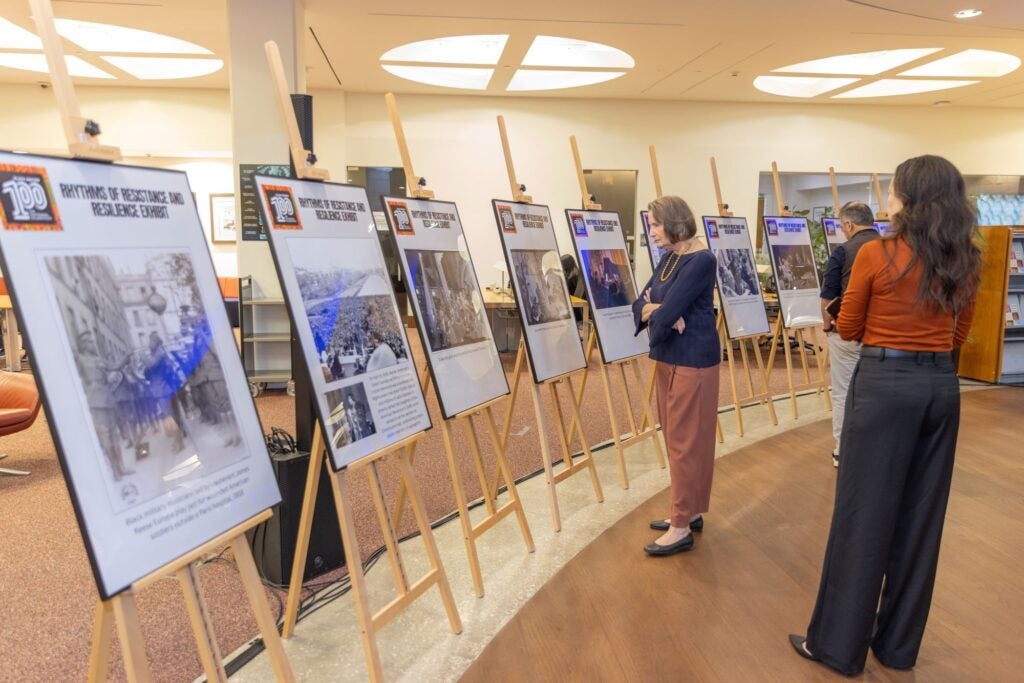
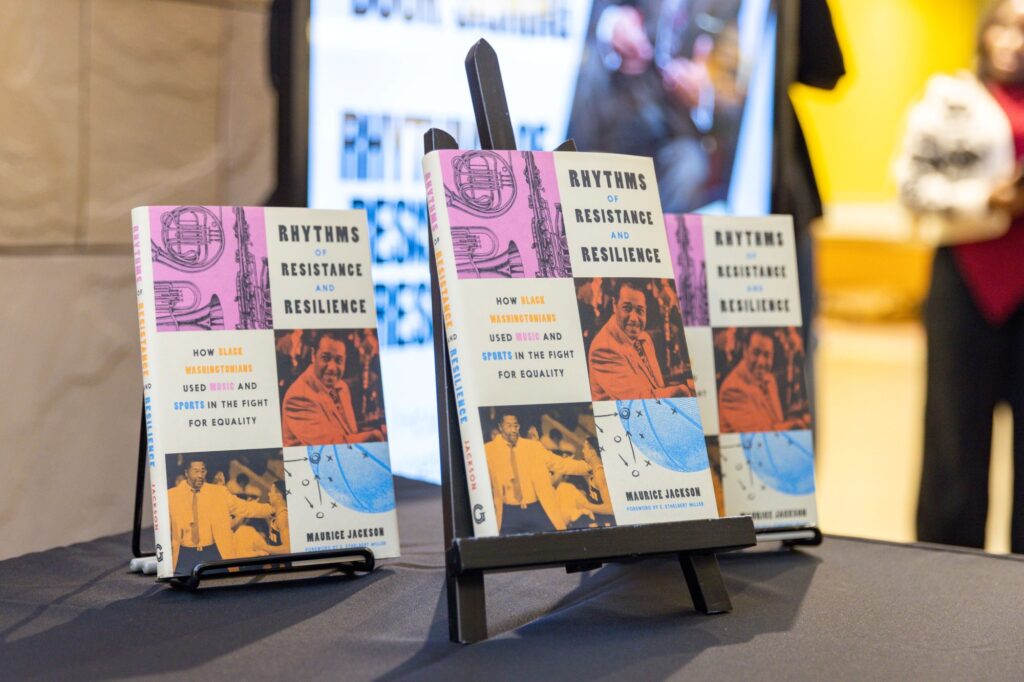
Emerging from his book Rhythms of Resistance and Resilience: How Black Washingtonians Used Music and Sports in the Fight for Equality (Georgetown University Press, 2025), the exhibit explores the powerful intersection of culture, community, and activism in the struggle for civil rights and social justice. In the center of the exhibit, the Qatar-based Jazz duo of Ade Inubile on vocals and Enrick Adam on guitar improvise a call and response that evokes spiritual triumph over tribulation.
The scene perfectly underscores Professor Jackson’s message: “Artists and musicians take complex ideas and human stories of struggle and make them understandable to a wider audience.”
While his research on the history of black communities in the nation’s capital tells the story of the country as a whole, it has even broader resonance when viewed outside of the confines of America.
“Black History is relevant to every country,” explains Dr. Jackson. “Black experiences serve as an embodiment of a people, anywhere in the world, who have fought to overcome the most extreme oppression and exploitation.”
For the celebrated Washingtonian who served as the inaugural chair of the DC Commission on African American Affairs, was entered into the DC Hall of Fame, and had a Recognition Resolution Bill passed in his name by the DC Council, sharing this history in Qatar with its richly diverse student body amplifies a universal message of peace.
“These students may one day go back home and become leaders who strive to play major roles in the peaceful and prosperous development of their countries and all of its peoples,” he says. “That is the beauty of the university experience. To allow young people to learn about themselves and others.”

Black History Month at GU-Q
Celebrations to commemorate Black History Month’s centennial year continue throughout the month, culminating in a Spring Break student trip to Ghana. Upcoming events include:
February 4, 2026, 6:00 pm: “Faith Forward: Exploring Faith Foundations in African Diasporic Communities” featuring Rev. Ebony Grisom, Georgetown University, Dr. Akhnuwkh Jones, Hamad Medical Corporation, and GU-Q professors Dr. Ayman Shabana and Dr. Akinade Akintunde
February 8, 2026, 5:30 pm: Public talk with celebrated media personality and intellectual Dr. Marc Lamont Hill on “100 Years Later: Why Does Black History Still Matter in Today’s Global World?”
February 11, 2026, 5:00 pm: “Living Pan-African Abroad” featuring Former African Union Ambassador H.E. Arikana Chihombori, and former US Ambassador to Qatar, H.E. Timmy Davis, in conversation with Journalist and GU-Q Practitioner-in-Residence Nesrine Malik.
February 11, 2026, 6:00 pm: Ghana Immersive Showcase
About Dr. Maurice Jackson
Maurice Jackson (G’95, G’01) received his PhD from Georgetown University and was recognized with the 2025 Distinguished Leader Award from the Georgetown University Alumni Association. His newest book is part of a triptych that began with the co-edited volume on DC Jazz: Stories of Jazz Music in Washington, DC, and will end with the upcoming book Halfway to Freedom: The Struggles and Strivings of Black Folk in Washington, DC (Duke University Press), which covers the history of American equality and human rights from 1780 to 2020.