

Zones of Conflict, Zones of Peace
About the Program
The Zones of Conflict, Zones of Peace (ZCZP) program enables students to study conflict management and resolution in its real-life application across the globe. Since 2007, the award-winning program has been taking students to zones of ethnic, political, religious and social conflict, with the goal of better understanding both the causes of the conflict and the difficult process of reconciliation.
The 3-credit course taught by a faculty subject expert on the region begins by exploring the conflict, followed by a one or two-week long a faculty-led trip to the region. During the trip, the group meets with key witnesses, politicians, and change-makers, and visits points of historical interest in order to connect their academic learning with first hand accounts and experiences with the current reality on the ground in the zone of conflict.
How to Apply
Approximately 15-20 students are chosen each year for this special program and course. Students selected for the program are required to be in good academic standing and go through a competitive application process that includes personal reflections and academic essays. Contact Student Life for more information.
Past Programs

Mauritius
Washington, DC, and Doha campuses came together to study how Mauritius navigates multiculturalism and identity under the mentorship of Dr. Cóilín Parsons, Dr. Ananya Chakravarti, and Dr. Rogaia Abusharaf.
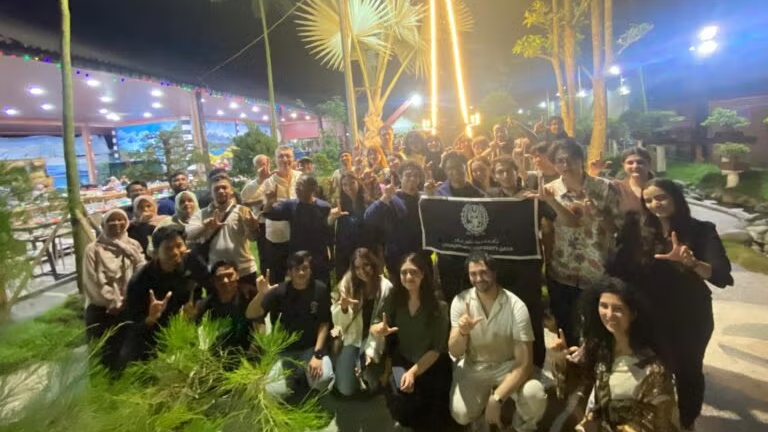
Indonesia
Dr. Firat Oruc and Dr. Raha Hakimdavar brought their Energy and Environment class to Indonesia to study the lasting effects of colonial-era policies on the environment.
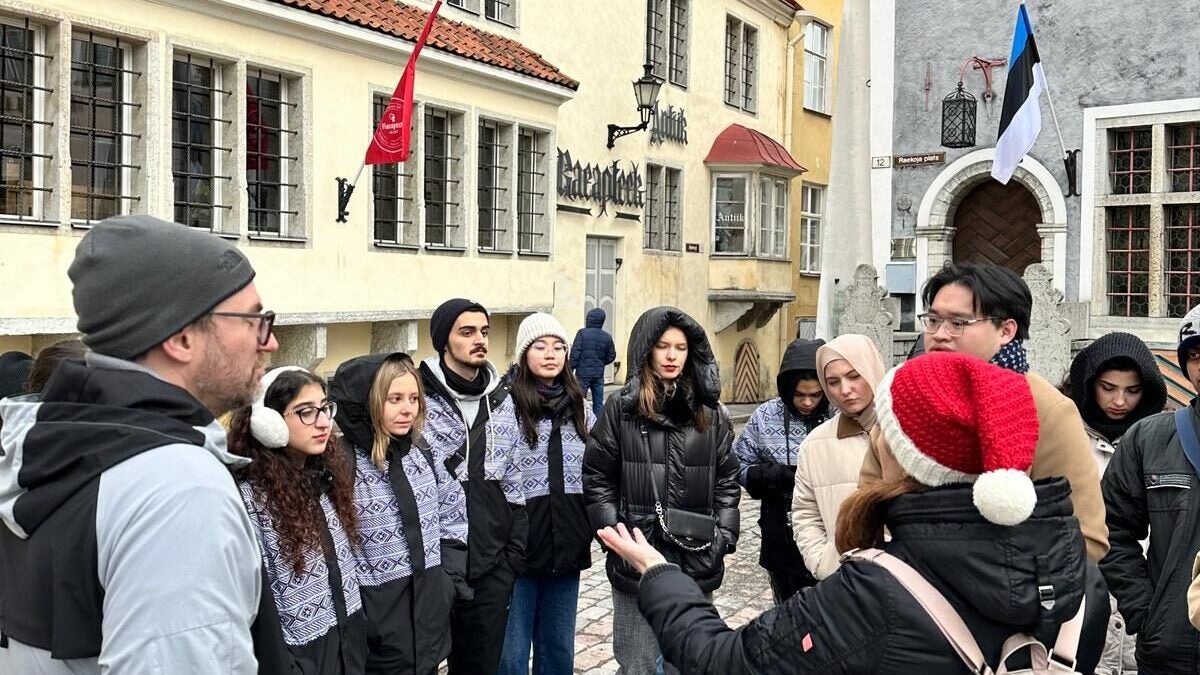
Finland and Estonia
Professor Edward Kolla brought his history class on post-Soviet Eastern Europe, to Finland and Estonia.
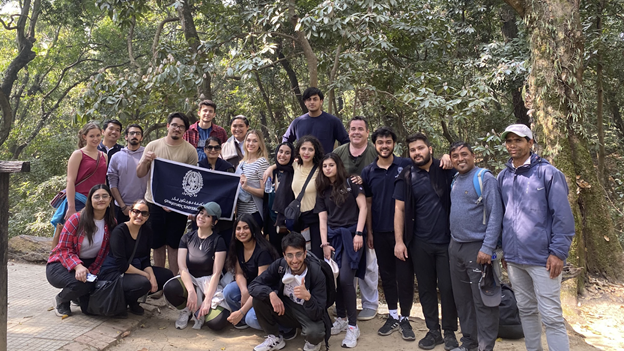
Nepal
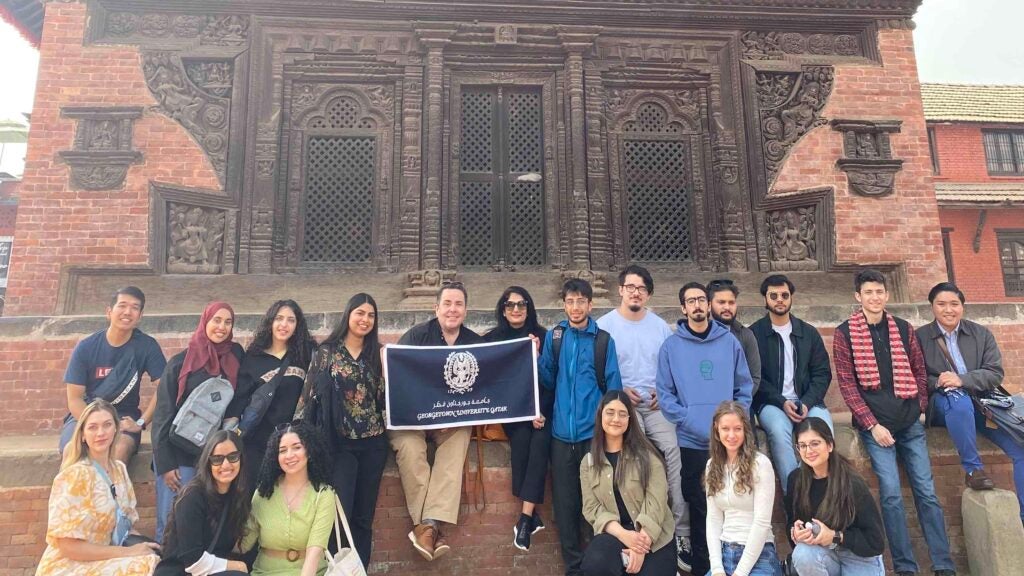
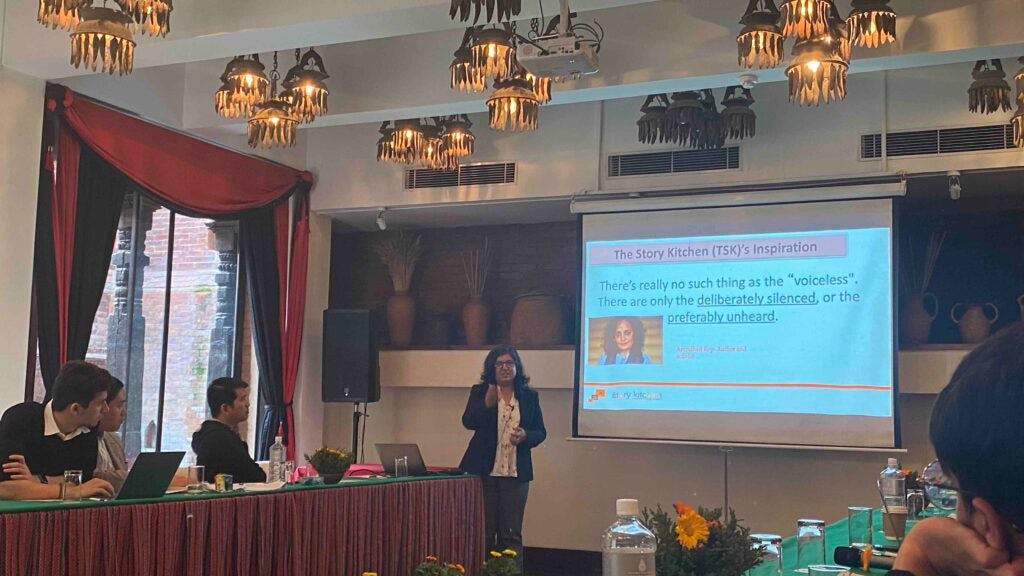
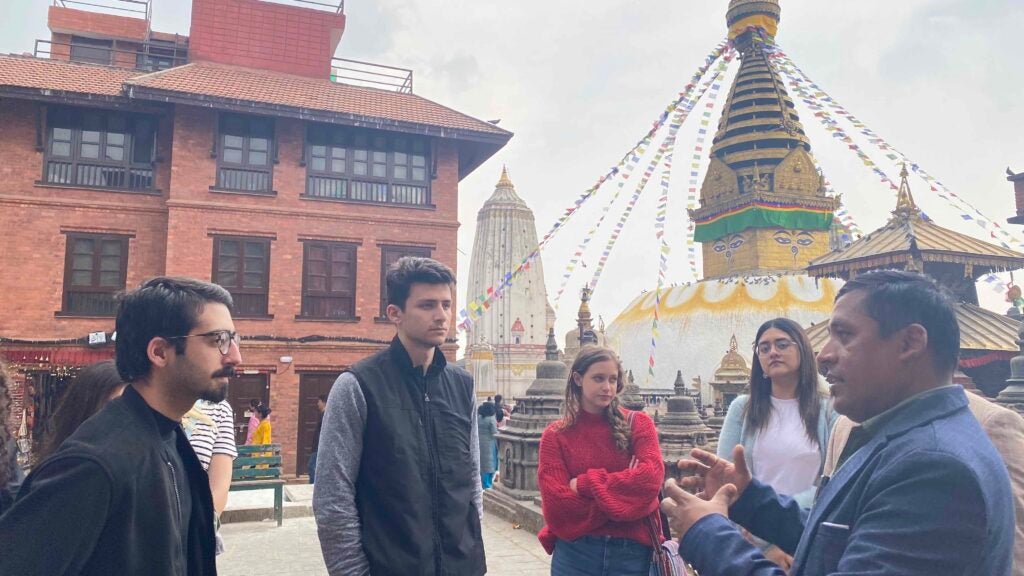
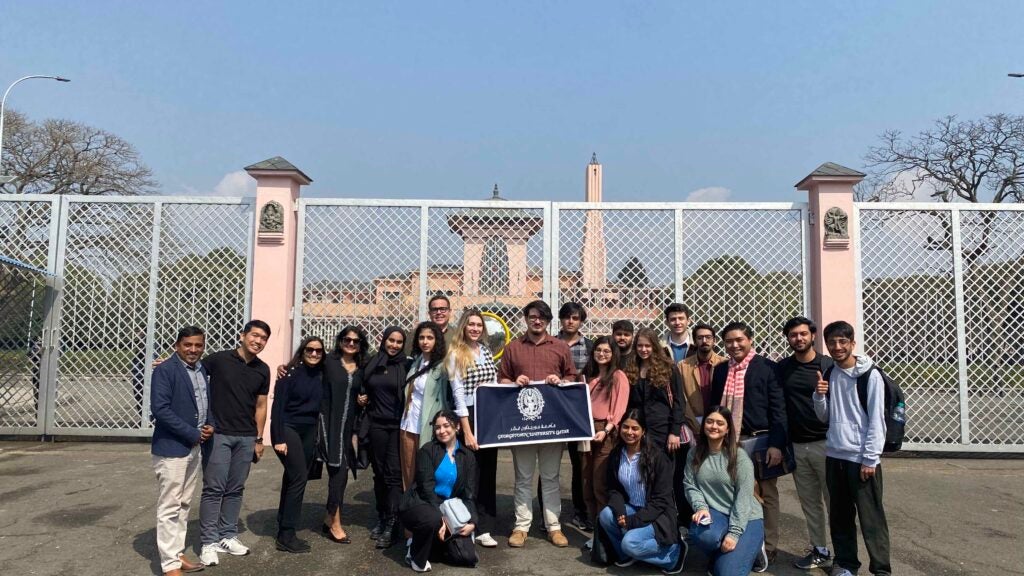
Zahra Babar brought her class to Nepal to study the People’s War (1996-2006).
All Trips
Nepal
Spring 2023—Dean Brendan Hill and Associate Director of CIRS Zahra Babar took 17 students to Nepal to study the People’s War (1996-2006).
Spain and Basque Country
Spring 2019—Professor Sonia Alonso Sáenz de Oger and students traveled to the Basque Country to study the causes of the ETA armed conflict.
China
Summer 2018—Students learned about the history and culture of Muslims in China with Professor Max Oidtmann.
Japan
Summer 2017—Professor Kai-Henrik Barth led 15 students to Japan to study the dropping of the atomic bombs on Hiroshima & Nagasaki.
Oman and Zanzibar
Summer 2016—Professor Rogaia Abusharaf’s class studied the history, politics, and aftermath of the violence that accompanied the expulsion of Arabs during the 1964 revolution in Zanzibar.
Zanzibar
The group focused on tackling the lack of information on the ethnic conflict in Zanzibar, and looked at how genocide is constructed and labeled in the international community.
United States
Spring 2015—Tracing the culture, history and politics of Muslims, Professors Karine Walther and Abdullah Al-Arian focused on the historical path of migration of Muslim immigrants to USA.
South Africa
Summer 2014—Students looked at the use of sports, arts, and culture in ongoing reconciliation in the 20 years after the 1994 end of apartheid.
Northern Ireland
Spring 2014—Students looked at the use of sports in reconciliation efforts since the signing of the 1998 Good Friday/Belfast Agreement.
Germany and Poland
Summer 2013—15 students traveled to Germany and Poland to learn about the Holocaust, its subsequent memorialization and efforts in regards to reconciliation and justice.
Rwanda
Spring 2013—Students learned about the 1994 genocide, and the subsequent memorialization, reconciliation, and justice efforts in Rwandan society after the event.
Timor-Leste
Summer 2012—Students studied the aftermath of the Indonesian occupation from 1975 to 1999, the transitional administration by the United Nations and the East Timorese independence in 2002.
Cambodia
Spring 2012—Students studied the aftermath of the 1975-1979 genocide, with a focus on international law and the ongoing Khmer Rouge trials.
South Africa
Summer 2011—Students looked at the use of arts and culture in ongoing reconciliation efforts since the 1994 decree to end apartheid.
Northern Ireland
Spring 2011—Students looked at the use of arts and culture in ongoing reconciliation efforts since the signing of the 1998 Belfast Agreement.
Bosnia and Herzegovina
Spring 2010—Students studied educational, governmental, and economic realities in the 15 years following the Srebrenica genocide.
Cyprus
Spring 2010—Students learned about the conflict between the internationally recognized state of Cyprus and the unofficial Turkish Republic of Northern Cyprus.
Germany and Poland
Summer 2009—Students traveled to Germany and Poland to learn about the Holocaust, its subsequent memorialization, and efforts at facilitating unity and justice.
Rwanda
Spring 2009—Students learned more about the 1994 genocide, attempts at collective remembrance, and the reconciliation and justice efforts in Rwandan society.
Palestine and Israel
Summer 2008—Students traveled to Palestine and Israel for the first program trip under the new Zones of Conflict, Zones of Peace name.
Jordan
Summer 2007—Labeled as the first ZCZP experience, the focus of this trip was on micro-finance and small business enterprises seeking to better understand the situation of Palestinian and Iraqi refugees.